The Origin of Gold and Heavy Elements in Space
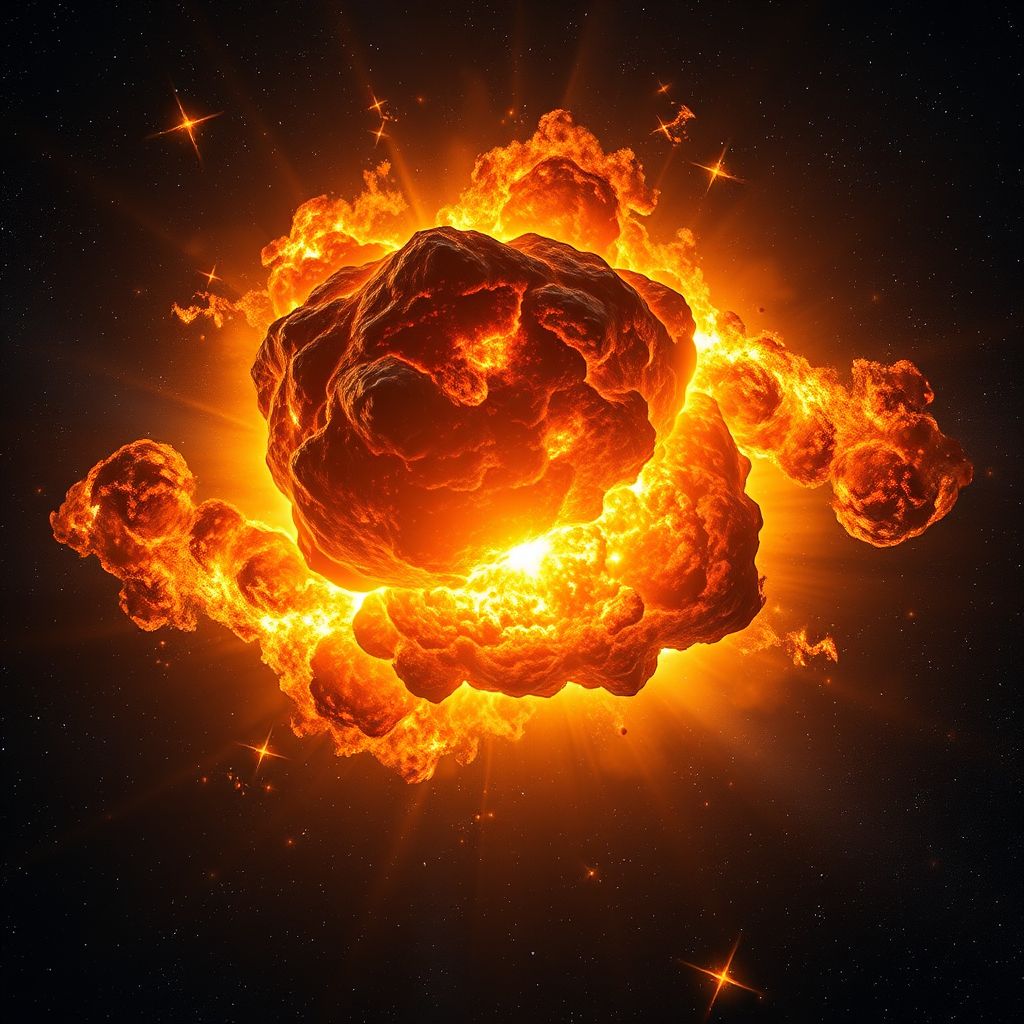
The quest to understand the origin of gold and heavy elements in space has captivated astronomers and physicists for decades. The unique properties of these elements have not only led to significant advancements in technology but also provide crucial insights into the workings of our cosmos. This article delves deep into the cosmic processes that create such precious materials, examining their role in stellar evolution and the broader context of nucleosynthesis.
The Origin of Gold and Heavy Elements in Space
Understanding the origin of gold and heavy elements in space is fundamental to comprehending the universe’s structure. These elements, which include iron, platinum, uranium, and others with atomic numbers above 40, do not form under normal stellar conditions but through rare and intense cosmic events.
- Nucleosynthesis Processes
- Supernova Explosions
- Colliding Neutron Stars
- Implications for Cosmology and Astrophysics
- Current Research and Future Prospects
- The Value of Gold in the Financial Market
Nucleosynthesis Processes
The formation of elements through nucleosynthesis is a cornerstone of astrophysics. While light elements like hydrogen and helium are abundant due to Big Bang nucleosynthesis, heavier elements require more complex processes.
Supernova Explosions: A Major Contributor to Heavy Element Production
When massive stars reach the end of their life cycle, they undergo supernova explosions. These cataclysmic events are responsible for dispersing heavy elements throughout space.
The Role of Neutrinos in Supernovae
The interaction between neutrinos and matter within a collapsing star is critical to the formation of gold and other heavy metals. Neutrinos carry away significant amounts of energy, driving explosive shock waves that forge elements beyond iron.
Colliding Neutron Stars: A Goldmine for Precious Metals
The collision of neutron stars represents one of the most efficient mechanisms for producing gold and other heavy elements. This process, known as r-process nucleosynthesis, occurs in less than a second.
Observational Evidence from GW170817
The detection of gravitational waves from the merger of two neutron stars provided unprecedented evidence for this theory. The subsequent observation of a kilonova confirmed the production of heavy elements, including gold.
Implications for Cosmology and Astrophysics
The study of the origin of gold and heavy elements in space has profound implications for our understanding of galaxy formation and evolution. These metals act as tracers, helping researchers map the history and structure of the cosmos.
Galactic Chemical Evolution Models
The presence of heavy elements influences how galaxies grow over time. By studying their distribution across different regions of space, scientists can refine models predicting galaxy growth and stellar populations.
Current Research and Future Prospects
Ongoing research continues to uncover new insights into nucleosynthesis processes. Advances in observational techniques and theoretical modeling are key areas of focus for future studies.
Next Steps for Investigation
The next generation of telescopes, such as the James Webb Space Telescope (JWST), promises to provide more detailed information about heavy element production. Scientists hope these instruments will reveal even finer details about r-process nucleosynthesis.
The Value of Gold in the Financial Market
Gold’s rarity and intrinsic value make it a significant asset in financial markets, influencing economies worldwide. Its role as a hedge against inflation and market volatility underscores its enduring importance beyond scientific inquiry.
For further reading on the broader context of cosmic nucleosynthesis, visit OriginCosmic. Understanding the origin of gold and heavy elements in space not only enriches our knowledge of astrophysics but also impacts practical applications in finance and technology.
Conclusion: Key Takeaways on the Origin of Gold and Heavy Elements in Space
The creation of heavy elements through supernovae explosions and neutron star mergers is a testament to the dynamic nature of our universe. These cosmic events not only shape galactic structures but also contribute precious materials with immense practical value.

- OrginCosmic
- Interstellar Probes and the Future of Space Exploration March 27, 2026
- How Supernovae Shape Galaxy Evolution March 27, 2026
- Unexplained Transient Astronomical Events March 27, 2026
- The Role of Dark Energy in Cosmic Evolution March 27, 2026
- Vacuum Decay: A Doomsday Scenario for the Universe? March 27, 2026