Strange Phenomena in the Magellanic Clouds
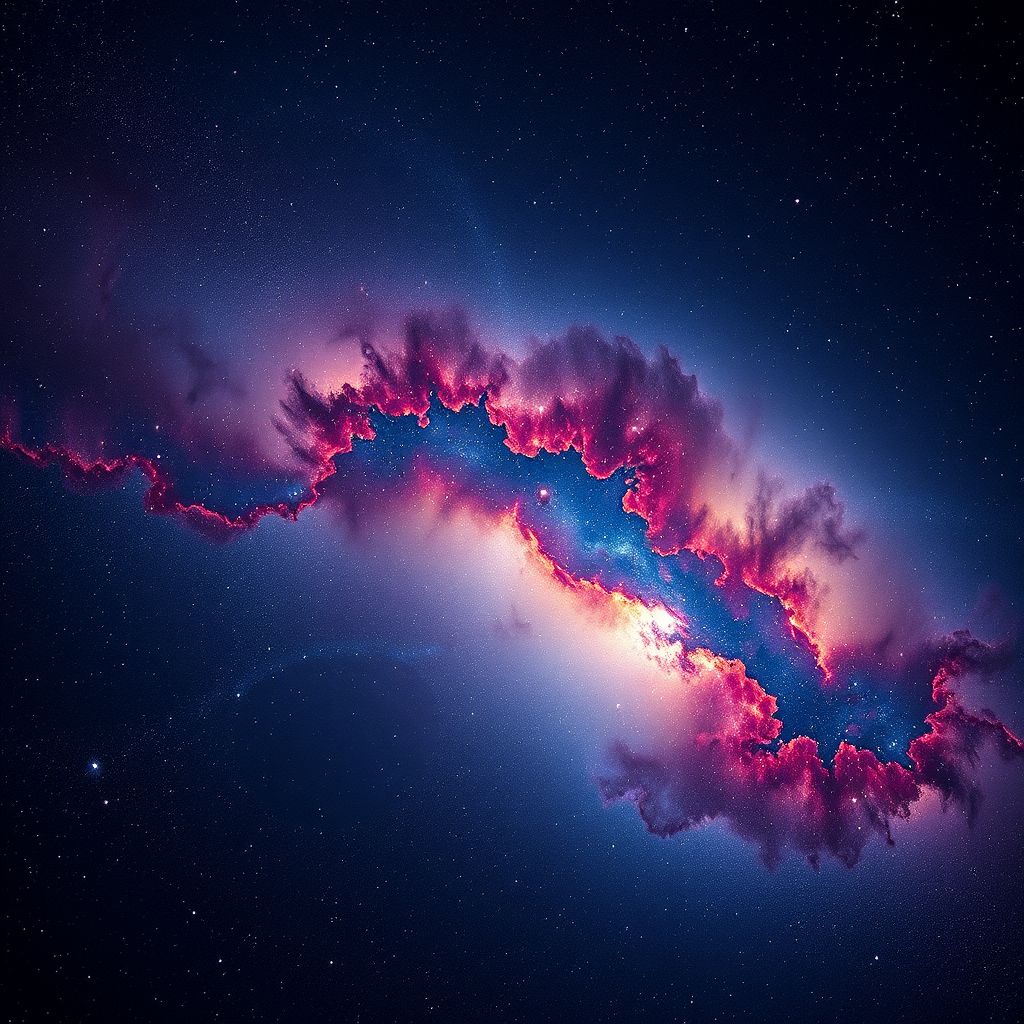
Strange phenomena in the Magellanic Clouds continue to captivate astronomers around the globe. These two small galaxies orbiting our Milky Way are not just bystanders in the cosmos but active participants in some of the most intriguing cosmic occurrences known to humankind. The study of these phenomena is crucial for unraveling the mysteries of galactic evolution and stellar formation, offering insights that could redefine our understanding of the universe.
- Introduction to Strange Phenomena in the Magellanic Clouds
- Historical Observations and Discoveries
- Current Research Focus: Star Formation and Stellar Dynamics
- Supernova Remnants and Cosmic Ray Acceleration
- Molecular Clouds and Interstellar Medium Characteristics
- Astrophysical Jets and Black Holes in the Magellanic Clouds
- Technological Advances for Observing the Magellanic Clouds
- Future Directions and Upcoming Missions
- Conclusion: The Impact of Strange Phenomena in the Magellanic Clouds on Cosmology
Introduction to Strange Phenomena in the Magellanic Clouds
The Magellanic Clouds, comprising the Large Magellanic Cloud (LMC) and the Small Magellanic Cloud (SMC), are satellite galaxies of our Milky Way. They are relatively close to Earth at distances of about 160,000 light-years for the LMC and approximately 200,000 light-years for the SMC. These galaxies have long been a subject of fascination due to their unique characteristics and the strange phenomena that occur within them.
Strange phenomena in the Magellanic Clouds range from stellar explosions to the formation of massive star clusters. Understanding these phenomena is essential not only for unraveling galactic mysteries but also for advancing our knowledge about cosmic processes such as supernova explosions, star birth, and black hole activity.
Historical Observations and Discoveries
The historical study of the Magellanic Clouds dates back to their initial discovery by European explorers in the 16th century. Over time, as astronomical technology advanced, more detailed observations revealed a plethora of strange phenomena that continue to intrigue scientists today.
Early Discoveries
The first recorded observation of these galaxies was made by Portuguese explorer Ferdinand Magellan during his circumnavigation of the globe in 1519. However, it wasn’t until the late 18th century that British astronomer Nicolas Louis de Lacaille began systematically mapping them.
Modern Observations
In the 20th and early 21st centuries, advancements in observational astronomy allowed for deeper insights into strange phenomena occurring within these galaxies. Discoveries such as the Tarantula Nebula, a massive stellar nursery located in the LMC, have provided invaluable data about star formation processes.
Current Research Focus: Star Formation and Stellar Dynamics
One of the most intriguing aspects of strange phenomena in the Magellanic Clouds is their role in understanding the lifecycle of stars. The regions rich with hydrogen gas are prime locations for studying how stellar nurseries evolve over time.
Star Clusters
The R136 star cluster, located within the Tarantula Nebula, houses some of the most massive and luminous stars known to exist in our cosmic neighborhood. Observations reveal that these stars are not only forming but also interacting with their surroundings through powerful stellar winds.
Interstellar Medium
The interstellar medium (ISM) of the Magellanic Clouds is crucial for star formation processes due to its high density and active dynamical state. Astronomers use various wavelengths, from radio waves to X-rays, to study how gas clouds collapse under gravity to form new stars.
Supernova Remnants and Cosmic Ray Acceleration
Another captivating area of research involves the remnants left behind by supernovae explosions. These events are not only fascinating in their own right but also offer clues about cosmic ray acceleration, a phenomenon that remains poorly understood.
SNR N132D: A Case Study
The supernova remnant SNR N132D is one of the best-studied examples within the LMC. Observations from space telescopes like Chandra and XMM-Newton have provided detailed information about how cosmic rays are accelerated in these environments.
Molecular Clouds and Interstellar Medium Characteristics
Molecular clouds, which are dense regions of gas and dust where stars form, play a pivotal role in the strange phenomena observed within the Magellanic Clouds. These clouds exhibit unique properties that differ from those seen elsewhere in the cosmos.
Cloud Dynamics
Studies have shown that molecular clouds in the Magellanic Clouds are highly dynamic, often undergoing turbulent motions that can trigger star formation events. This turbulence is thought to be driven by the gravitational influence of nearby massive stars and supernovae explosions.
Astrophysical Jets and Black Holes in the Magellanic Clouds
Recent observations suggest a possible link between strange phenomena in the Magellanic Clouds and the presence of black holes. The discovery of astrophysical jets, powerful beams of particles emitted from near these objects, adds another layer to our understanding.
Jets and Star Formation
Astrophysical jets are often associated with star formation processes where young stellar objects (YSOs) can emit collimated outflows. These phenomena are crucial for regulating the amount of mass accreted onto newly forming stars, influencing their eventual properties.
Technological Advances for Observing the Magellanic Clouds
The ability to observe strange phenomena in the Magellanic Clouds has been significantly enhanced by recent technological advancements. Next-generation telescopes are providing unprecedented views of these galaxies, allowing researchers to delve deeper into their mysteries.
James Webb Space Telescope (JWST)
The JWST, launched in 2021, is one such instrument that promises to revolutionize our understanding of the Magellanic Clouds. Its ability to observe at infrared wavelengths allows it to peer through dust clouds and study star formation processes in unprecedented detail.
Future Directions and Upcoming Missions
As we look ahead, future missions and research initiatives will continue to shed light on the strange phenomena occurring within the Magellanic Clouds. Collaborative efforts between international space agencies are paving the way for new discoveries.
Upcoming Observatories
The Square Kilometer Array (SKA) is an ambitious project set to become one of the world’s largest and most sensitive radio telescopes. Expected to begin operations in the mid-2020s, the SKA will provide unparalleled insights into cosmic phenomena across a wide range of wavelengths.
Conclusion: The Impact of Strange Phenomena in the Magellanic Clouds on Cosmology
In conclusion, strange phenomena in the Magellanic Clouds offer valuable insights into the workings of our universe. From star formation to cosmic ray acceleration, these galaxies continue to be a focal point for astronomical research. As technology advances and new missions are launched, we can expect even more revelations about the enigmatic nature of these nearby celestial neighbors.

- OrginCosmic
- Interstellar Probes and the Future of Space Exploration March 27, 2026
- How Supernovae Shape Galaxy Evolution March 27, 2026
- Unexplained Transient Astronomical Events March 27, 2026
- The Role of Dark Energy in Cosmic Evolution March 27, 2026
- Vacuum Decay: A Doomsday Scenario for the Universe? March 27, 2026