Impact of Solar Flares and Space Weather on Earth
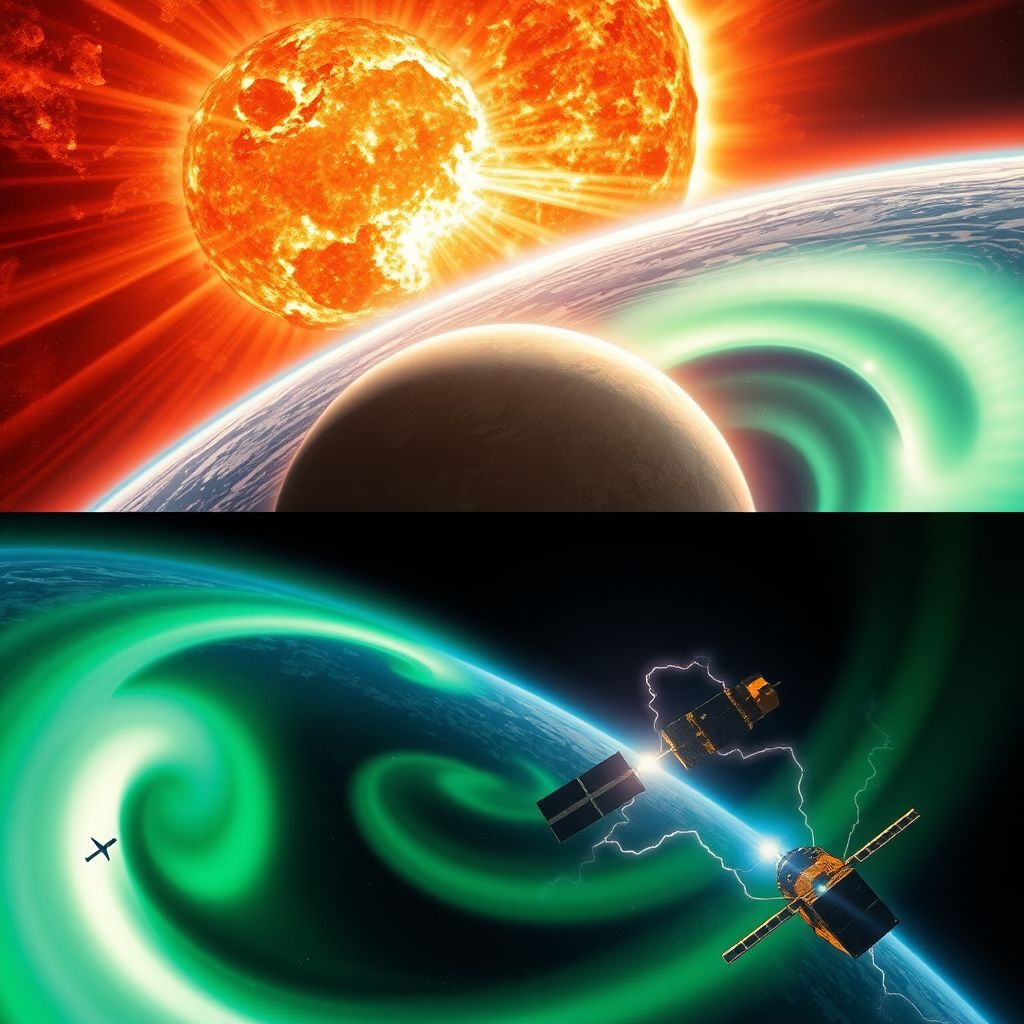
The sun, our nearest star, has a profound influence on life on Earth beyond just providing light and warmth. However, phenomena such as solar flares and space weather can disrupt technological systems that are integral to modern society. Understanding the Impact of Solar Flares and Space Weather on Earth is crucial for maintaining security and resilience in our technologically dependent world.
Table of Contents
- Introduction to Solar Flares and Space Weather
- The Science Behind Solar Flares and Space Weather
- Understanding the Source of Solar Activity
- Impact on Communication Systems
- Effects on Power Grids and Electrical Infrastructure
- Impacts on Space Exploration Missions
- Mitigation Strategies for Solar Storms
- Future Outlook and Research Directions
Introduction to Solar Flares and Space Weather
Solar flares are sudden bursts of energy from the sun, often accompanied by the release of particles that travel through space at high speeds. This phenomenon is part of a broader category known as space weather, which includes other events like coronal mass ejections (CMEs) and solar radiation storms. These events can significantly affect Earth due to our increasing reliance on satellite technology, global navigation systems, and power grids.
Overview of Space Weather Terminology
To fully grasp the impact of solar flares and space weather, it’s essential to familiarize oneself with key terms. For instance, geomagnetic storms, a result of CMEs interacting with Earth’s magnetosphere, can cause disruptions in satellite operations and communication networks.
The Science Behind Solar Flares and Space Weather
The science behind solar flares involves complex processes within the sun’s atmosphere. These events occur when magnetic energy built up in the sun’s magnetic field is suddenly released, causing intense bursts of radiation and particle acceleration.
Magnetic Field Dynamics
Understanding how the sun’s magnetic fields interact and change over time provides critical insights into predicting solar flares. Solar astronomers use advanced models to simulate these processes, enabling better forecasts of space weather events.
Role of Coronal Holes
Coronal holes are regions on the sun where magnetic field lines extend out into space rather than looping back down. These areas can lead to high-speed solar wind streams that impact Earth, contributing to geomagnetic disturbances.
Understanding the Source of Solar Activity
Origin Cosmic offers detailed insights into the mechanisms driving solar activity. Their research highlights how variations in the sun’s rotation and magnetic cycles influence the frequency and intensity of flares.
Impact on Communication Systems
Solar flares can severely disrupt communication systems by interfering with radio waves and other electromagnetic signals used for long-distance transmission. During a major solar storm, GPS satellites may experience increased errors or even temporary outages.
Satellite Communications Vulnerability
Communication satellites are particularly at risk due to their exposure to high levels of radiation and particles from solar storms. Proactive measures such as shielding and improved redundancy designs can mitigate these risks but remain costly solutions for satellite operators.
Effects on Power Grids and Electrical Infrastructure
The impact of severe space weather events extends beyond just communications; it also poses a significant threat to power grids. A large geomagnetic storm could induce voltages that damage transformers, leading to widespread blackouts.
Transformer Damage Mechanism
During intense solar storms, the Earth’s magnetic field can cause strong currents in power lines and transformers, potentially overheating or damaging equipment. This phenomenon underscores the need for robust protective measures within national energy infrastructure planning.
Impacts on Space Exploration Missions
The risks posed by solar flares extend beyond Earth’s immediate vicinity to encompass space exploration endeavors as well. Astronauts and spacecraft in orbit or traveling between planets are exposed to enhanced levels of radiation during periods of heightened solar activity.
Radiation Protection Measures
Space agencies incorporate detailed plans for shielding astronauts from harmful solar particle events, including the use of water tanks as additional barriers against radiation. However, these solutions add significant weight and complexity to mission designs.
Mitigation Strategies for Solar Storms
To mitigate the effects of severe space weather on Earth-based technologies, several strategies have been proposed and implemented:
- Enhanced Monitoring Systems: Investing in better ground and satellite-based monitoring networks to provide early warnings.
- Improved Forecasting Models: Developing more accurate predictive models based on comprehensive solar observation data.
- Better Infrastructure Design: Implementing resilient design principles for critical infrastructure such as power grids and communication systems.
Future Outlook and Research Directions
As our understanding of the sun and its effects on Earth continues to evolve, so too will our capabilities to predict and mitigate space weather impacts. Ongoing research into solar dynamics, geomagnetic storm forecasting, and advanced satellite technologies hold promise for a more resilient future.
Research Priorities
Key areas of focus include refining predictive models through increased observational data collection, developing new materials and technologies to enhance spacecraft resilience against radiation damage, and strengthening international cooperation in space weather monitoring and response strategies.
The Impact of Solar Flares and Space Weather on Earth is a multifaceted challenge that requires interdisciplinary collaboration between scientists, policymakers, and industry leaders. By addressing these issues proactively, we can ensure the continued advancement of technological innovation while safeguarding global systems from potential space weather threats.

- OrginCosmic
- Interstellar Probes and the Future of Space Exploration March 27, 2026
- How Supernovae Shape Galaxy Evolution March 27, 2026
- Unexplained Transient Astronomical Events March 27, 2026
- The Role of Dark Energy in Cosmic Evolution March 27, 2026
- Vacuum Decay: A Doomsday Scenario for the Universe? March 27, 2026