Searching for Water Across the Solar System
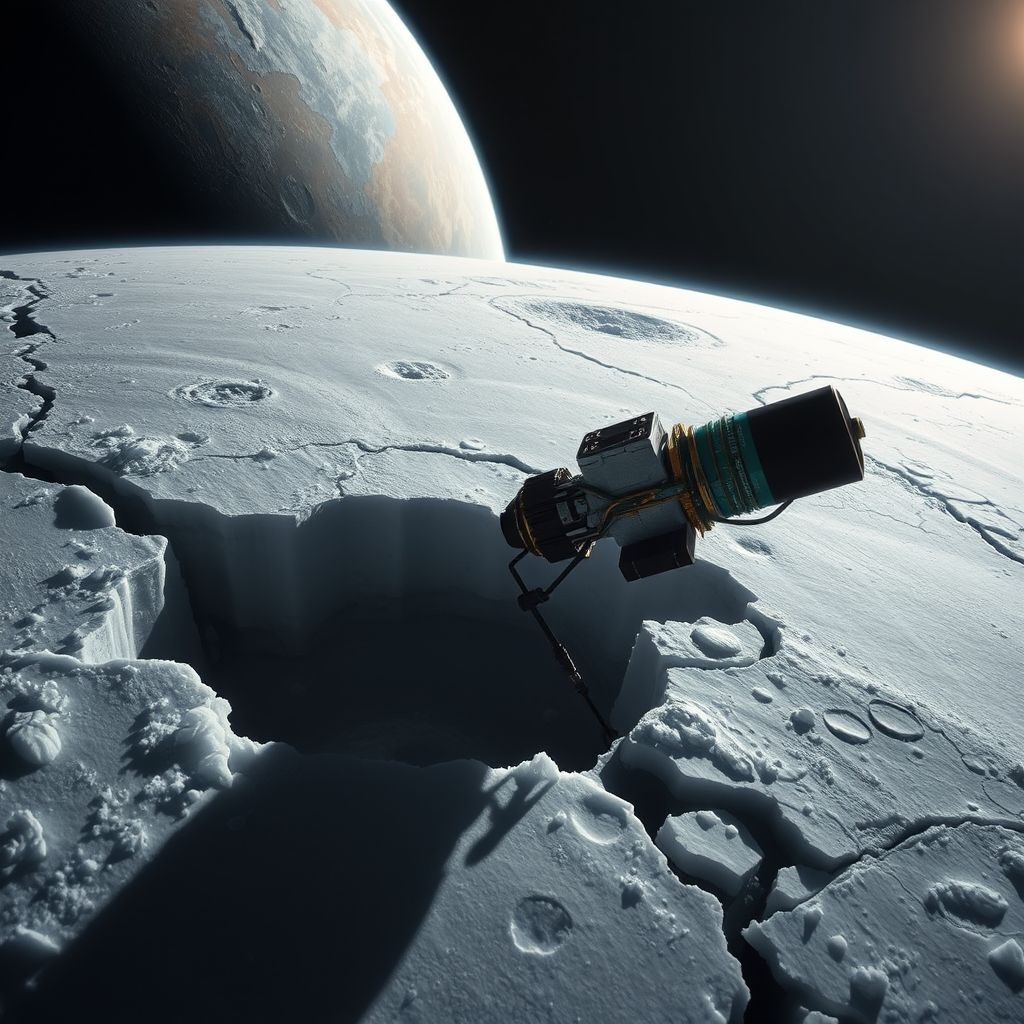
The quest for water across the solar system has captivated scientists and space enthusiasts alike for decades. The presence of water on other celestial bodies not only provides clues about the potential for life beyond Earth but also opens up possibilities for future human habitation and exploration. This article delves into the methods, findings, and significance of Searching for Water Across the Solar System, offering a comprehensive guide to understanding this critical aspect of space research.
- Introduction to Searching for Water Across the Solar System
- Methods and Technologies Used in Searching for Water
- Key Discoveries of Water in Our Solar System
- The Significance of Finding Water Across the Solar System
- Challenges and Future Prospects in the Search for Extraterrestrial Water
- Case Studies: Notable Missions in Searching for Water
- The Economic Implications of Discovering Water on Other Planets
- Conclusion and Future Directions in the Search for Extraterrestrial Water
Introduction to Searching for Water Across the Solar System
The search for water across our solar system is a multidisciplinary endeavor that combines planetary science, astrobiology, and engineering. Understanding where water might exist beyond Earth provides crucial insights into the potential habitability of other worlds and guides the development of technologies necessary for space exploration.
Methods and Technologies Used in Searching for Water
Researchers employ a variety of methods to search for water across the solar system, including remote sensing from orbiters, lander missions with onboard instruments like spectrometers, and ground-based telescopes. Each method has its strengths and limitations.
- Space Exploration Technologies: Innovations in spacecraft design enable more precise measurements of water signatures on distant planets.
- Spectroscopy: Identifies the presence of water molecules by analyzing light emissions and absorptions specific to H2O.
- Radar Imaging: Reveals subsurface features indicative of ice deposits beneath planetary surfaces.
Technological Advancements in Spectroscopy
Newer spectroscopic techniques, such as near-infrared and mid-infrared spectrometry, offer higher resolution and sensitivity compared to older methods. These advancements allow scientists to detect even trace amounts of water vapor or ice.
Key Discoveries of Water in Our Solar System
The search for water has led to several significant discoveries throughout our solar system, particularly on moons and smaller planets. Mars is often highlighted as a prime example due to its diverse geological features that suggest past or present liquid water.
Mars: A Case Study in Water Discovery
Missions like NASA’s Curiosity rover have confirmed the presence of ancient riverbeds, lakes, and possibly underground aquifers on Mars. The discovery of perchlorate salts also hints at past liquid water activity.
The Significance of Finding Water Across the Solar System
The identification of water across our solar system is crucial for understanding planetary evolution, astrobiology, and future human space exploration. Liquid water remains a key ingredient for life as we know it.
Implications for Astrobiology
Water-rich environments could harbor microbial life forms similar to those found in Earth’s extreme environments, such as deep-sea vents or salt pans.
Challenges and Future Prospects in the Search for Extraterrestrial Water
The search for water faces numerous challenges including harsh environmental conditions on other planets and moons. Technological limitations also restrict our ability to detect and analyze distant water signatures accurately.
Technological Limitations
Current technologies may struggle with identifying small amounts of water or differentiating between various forms (ice, vapor) on remote planets. Advances in spectroscopy could overcome some of these obstacles.
Case Studies: Notable Missions in Searching for Water
This section explores specific space missions that have made significant contributions to the search for water across our solar system, highlighting their scientific achievements and technological innovations.
Mars Reconnaissance Orbiter (MRO)
The MRO has provided detailed images of Mars’ surface and subsurface features. Its SHARAD radar instrument has detected water ice beneath the Martian polar caps, indicating substantial deposits that could be accessible for future exploration.
The Economic Implications of Discovering Water on Other Planets
Discoveries of water in space have profound economic implications. For instance, water can be broken down into oxygen and hydrogen, essential resources for life support systems during long-duration missions.
Economic Opportunities
The potential to mine and utilize extraterrestrial water could stimulate new industries and job markets dedicated to space resource extraction and management.
Conclusion and Future Directions in the Search for Extraterrestrial Water
In conclusion, Searching for Water Across the Solar System continues to be a dynamic field with ongoing discoveries enhancing our understanding of planetary systems. The future holds promising advancements in technology that will enable more accurate detection and characterization of extraterrestrial water.
The identification of water on other planets not only broadens our knowledge about the universe but also paves the way for sustainable human presence beyond Earth.

- OrginCosmic
- Interstellar Probes and the Future of Space Exploration March 27, 2026
- How Supernovae Shape Galaxy Evolution March 27, 2026
- Unexplained Transient Astronomical Events March 27, 2026
- The Role of Dark Energy in Cosmic Evolution March 27, 2026
- Vacuum Decay: A Doomsday Scenario for the Universe? March 27, 2026