Exomoons: Moons Orbiting Distant Exoplanets
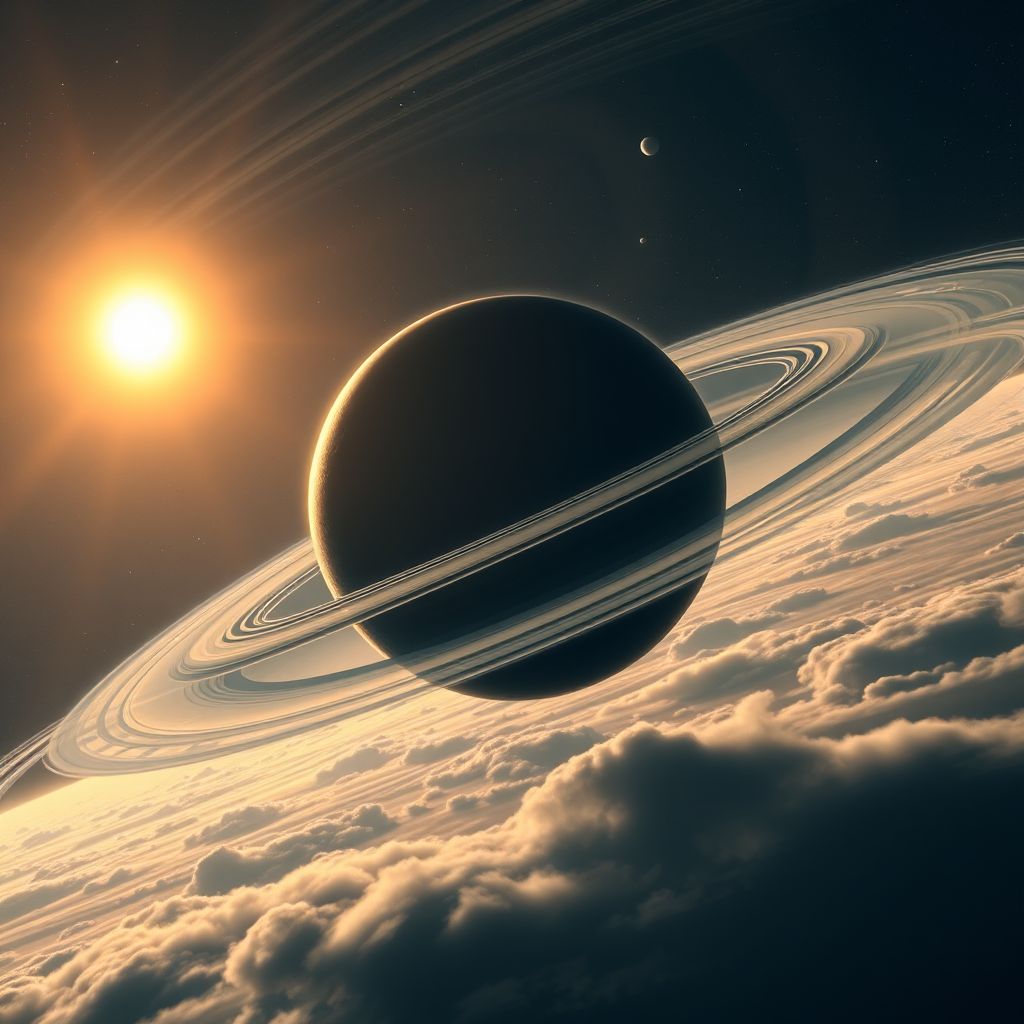
Exomoons: Moons Orbiting Distant Exoplanets have long fascinated scientists and astronomy enthusiasts alike due to their potential role in understanding planetary formation, habitability of exoplanetary systems, and the broader context of our universe’s diversity. These celestial bodies, which orbit planets outside our solar system, offer a unique lens through which we can study extraterrestrial environments and search for signs of life beyond Earth. This article delves into the intricacies of exomoons, exploring their detection methods, significance in astrobiology, and the future prospects of studying these distant moons.
- Understanding Exomoons: Moons Orbiting Distant Exoplanets
- Detection Methods for Exomoons: Challenges and Innovations
- Significance of Exomoons in Astrobiology and Planetary Science
- Case Studies: Notable Exomoons and Their Characteristics
- Technological Advances and Future Prospects for Studying Exomoons
- Challenges in the Study of Exomoons: Current Limitations and Future Directions
- Conclusion: The Role of Exomoons in Shaping Our Understanding of the Cosmos
Sub-sections:
Sub-sections:
Sub-sections:
Sub-sections:
Sub-sections:
Understanding Exomoons: Moons Orbiting Distant Exoplanets
Exomoons, as the term suggests, are natural satellites that orbit exoplanets. These celestial bodies are a critical component in the study of planetary systems and can provide valuable insights into the conditions necessary for life elsewhere in the universe. Despite their immense importance, detecting these moons poses significant technical challenges due to their small size relative to both their parent planets and distant stars.
One major reason exomoons capture scientific interest is because they offer a new avenue for exploring habitable zones around other stars. Unlike terrestrial planets within our solar system, exomoons are often located in areas where conditions may be more favorable for the presence of liquid water—an essential ingredient for life as we know it.
Detection Methods for Exomoons: Challenges and Innovations
The detection of moons orbiting distant planets is fraught with difficulty, primarily because these moons are often minuscule compared to their host exoplanets. Researchers have developed several techniques aimed at overcoming this challenge:
Transit Timing Variations (TTV)
One innovative method for detecting exomoons is the Transit Timing Variation technique, which relies on slight changes in a planet’s transit times across its star. These variations can be indicative of the gravitational influence exerted by an orbiting moon.
Radial Velocity Method
Another method involves monitoring the radial velocity of host stars as they wobble due to the gravitational tug from their planets and, potentially, accompanying moons. This technique is particularly useful for confirming exomoon candidates detected via other methods.
Microlensing Technique
Microlensing, which involves observing how light bends around distant stars as it passes by objects in space (including potential exomoons), provides another avenue for discovery. This method is especially effective at spotting smaller bodies at greater distances.
Significance of Exomoons in Astrobiology and Planetary Science
The study of exomoons holds significant promise for advancing our understanding of planetary science and astrobiology:
Potential for Habitability
Exomoons can provide additional habitable real estate within their parent planet’s system, offering new opportunities to search for signs of life. For instance, moons like Jupiter’s Europa have shown potential as candidates for extraterrestrial life due to the presence of subsurface oceans.
Role in Understanding Planetary Systems
By studying exomoons, researchers gain insight into how planets and their satellites form and evolve over time. This knowledge contributes significantly to our broader comprehension of planetary dynamics across different stellar systems.
Case Studies: Notable Exomoons and Their Characteristics
A few notable exomoons have garnered attention in recent years:
J1407b’s Massive Ring System
The discovery of J1407b, a planet with an extensive ring system reminiscent of Saturn’s, has captivated astronomers. While not yet confirmed to host moons, the presence of such rings suggests potential for satellite formation around this exoplanet.
Kepler 22b’s Habitable Zone Candidate
Kepler 22b is known as one of the first planets discovered in its star’s habitable zone. Its moons, if they exist, could offer a unique environment for studying life-sustaining conditions beyond Earth.
Technological Advances and Future Prospects for Studying Exomoons
The field of exomoon research is set to benefit from advancements in telescope technology:
Next Generation Telescopes
Telescopes such as the James Webb Space Telescope (JWST) and upcoming ground-based observatories like the Extremely Large Telescope (ELT) are poised to enhance our ability to detect exomoons by providing unprecedented resolution and sensitivity.
Space Missions Targeting Exoplanets and Their Moons
Future missions, such as NASA’s LUVOIR concept telescope, aim to directly image these distant worlds, including their moons. These efforts will greatly expand our knowledge base on exomoons.
Challenges in the Study of Exomoons: Current Limitations and Future Directions
Despite significant progress, several challenges remain:
Instrumentation Challenges
The current limitations in telescope capabilities restrict our ability to resolve details on exomoons. Improving observational instruments will be crucial for overcoming these hurdles.
Data Interpretation Difficulties
Interpreting the data collected from observations requires sophisticated algorithms and models, which need continuous refinement based on new findings.
Origincosmic.com, a leading platform in astrophysics research, offers valuable resources for those interested in exomoon studies. This site provides detailed analyses and discussions that complement the academic literature.
Conclusion: The Role of Exomoons in Shaping Our Understanding of the Cosmos
The study of exomoons continues to be a vibrant area of research, offering unparalleled opportunities for expanding our knowledge about planetary systems beyond our solar neighborhood. As detection methods improve and new technologies emerge, we can anticipate more discoveries that will further illuminate the diversity and complexity of celestial bodies in the universe.

- OrginCosmic
- Interstellar Probes and the Future of Space Exploration March 27, 2026
- How Supernovae Shape Galaxy Evolution March 27, 2026
- Unexplained Transient Astronomical Events March 27, 2026
- The Role of Dark Energy in Cosmic Evolution March 27, 2026
- Vacuum Decay: A Doomsday Scenario for the Universe? March 27, 2026