Rogue Worlds and Free-Floating Planets
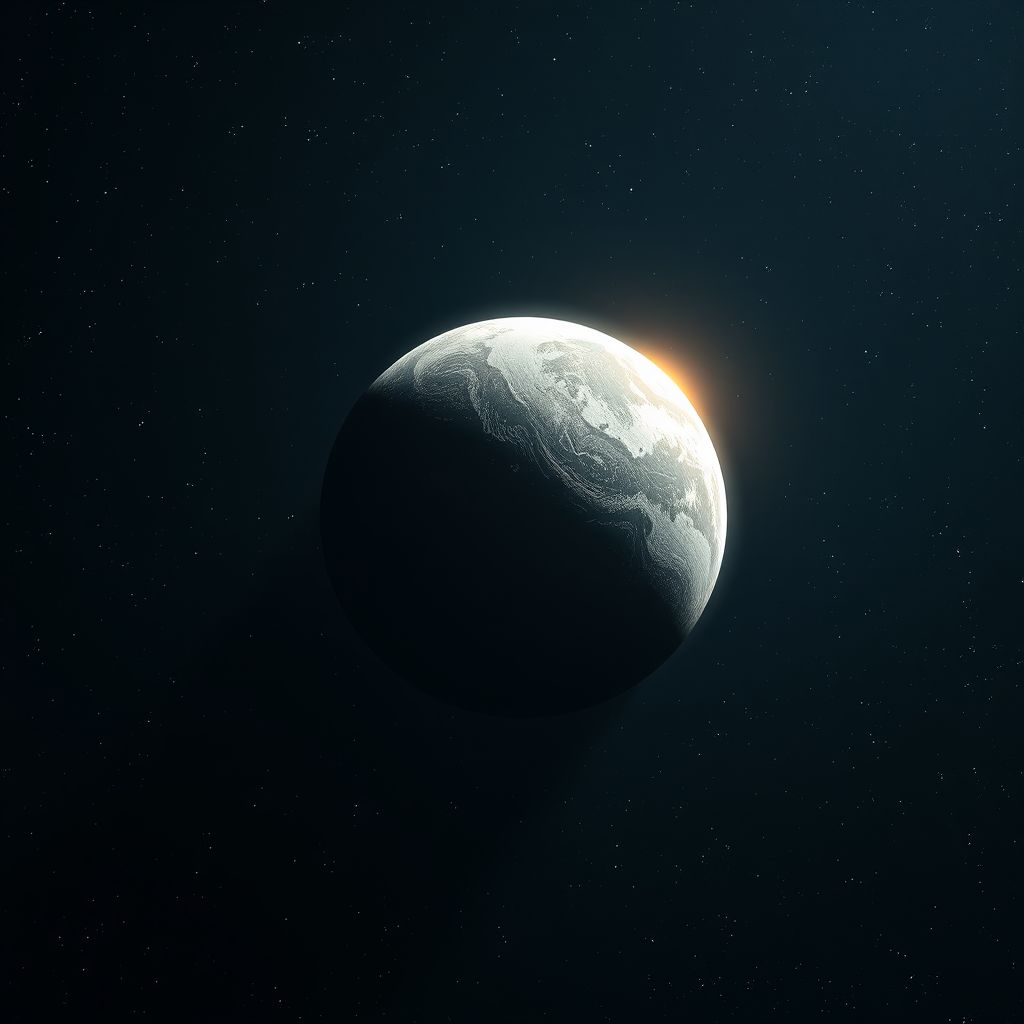
The universe is vast and full of mysteries, including celestial bodies that do not orbit any star or planetary system. These objects are known as rogue worlds and free-floating planets, fascinating entities that challenge our understanding of cosmology and planetary science. In this comprehensive guide, we will delve into the enigma of these solitary wanderers in space, providing insights into their origins, characteristics, and implications for future research.
Understanding Rogue Worlds and Free-Floating Planets
Rogue worlds and free-floating planets are celestial bodies that drift through interstellar space without being gravitationally bound to any star. Unlike traditional planets, these objects do not orbit a host star, making them difficult to detect and study. The term “rogue world” is often used interchangeably with “free-floating planet,” but the latter can also refer to brown dwarfs, which are substellar objects that form like stars but have insufficient mass to sustain hydrogen fusion.
Origins of Rogue Worlds and Free-Floating Planets
One of the primary theories behind the formation of rogue worlds is planetary ejection. This occurs when a planet’s orbit becomes unstable due to gravitational interactions with other planets or stars, causing it to be ejected from its parent system and left wandering through space.
Planetary Ejections
Planetary ejections can happen in multi-planetary systems where gravitational perturbations cause a planet’s orbit to become highly elliptical. If the ellipse extends beyond the gravitational influence of the star, the planet is ejected into interstellar space.
Detection and Study Methods
Identifying rogue worlds and free-floating planets presents unique challenges due to their lack of host stars for illumination or reflection. However, several techniques are being developed to detect these solitary wanderers:
Direct Imaging
High-resolution telescopes can capture images of extremely faint objects in interstellar space, including rogue worlds that emit residual heat from their formation.
Rogue Worlds and Free-Floating Planets: Characteristics and Implications
The characteristics of rogue worlds and free-floating planets are diverse. Some may retain atmospheres, while others might lose them due to the harsh conditions of interstellar space.
Atmospheric Loss
Rogue planets can lose their atmospheres over time through a process known as photoevaporation, where ultraviolet radiation from nearby stars or galactic cosmic rays strip away the planet’s gaseous envelope.
Observational Evidence and Discoveries
Several rogue worlds have been discovered in recent years. The first confirmed free-floating planet, CFBDSIR J1458+10B, was found by a team of astronomers using the Canada-France-Hawaii Telescope.
Confirmed Discoveries
Other notable examples include WISE 0855−0714, the coldest known free-floating planet, discovered in 2014 by NASA’s Wide-field Infrared Survey Explorer (WISE).
Future Research and Exploration
The study of rogue worlds and free-floating planets holds immense potential for advancing our understanding of planetary formation and evolution. As technology advances, we can expect more discoveries that will shed light on the nature and prevalence of these enigmatic objects in our universe.
Technological Advancements
Next-generation telescopes such as the James Webb Space Telescope (JWST) are expected to provide unprecedented insights into the atmospheres and environments of rogue worlds, enhancing our comprehension of their characteristics and behaviors.
- IntroductionUnderstanding Rogue Worlds and Free-Floating Planets
- Origins of Rogue Worlds and Free-Floating Planets
- Detection and Study Methods
- Rogue Worlds and Free-Floating Planets: Characteristics and Implications
- Observational Evidence and Discoveries
- Future Research and Exploration
Conclusion
Rogue worlds and free-floating planets offer a unique window into the chaotic and dynamic processes of planetary formation. As we continue to explore these solitary wanderers, our understanding of the cosmos will expand, revealing new insights about the universe’s history and the complex interplay between celestial bodies.
To learn more about cosmic phenomena like rogue worlds and free-floating planets, visit Origin Cosmic.

- OrginCosmic
- Interstellar Probes and the Future of Space Exploration March 27, 2026
- How Supernovae Shape Galaxy Evolution March 27, 2026
- Unexplained Transient Astronomical Events March 27, 2026
- The Role of Dark Energy in Cosmic Evolution March 27, 2026
- Vacuum Decay: A Doomsday Scenario for the Universe? March 27, 2026