Exoplanet Atmospheres Analyzed by Space Telescopes
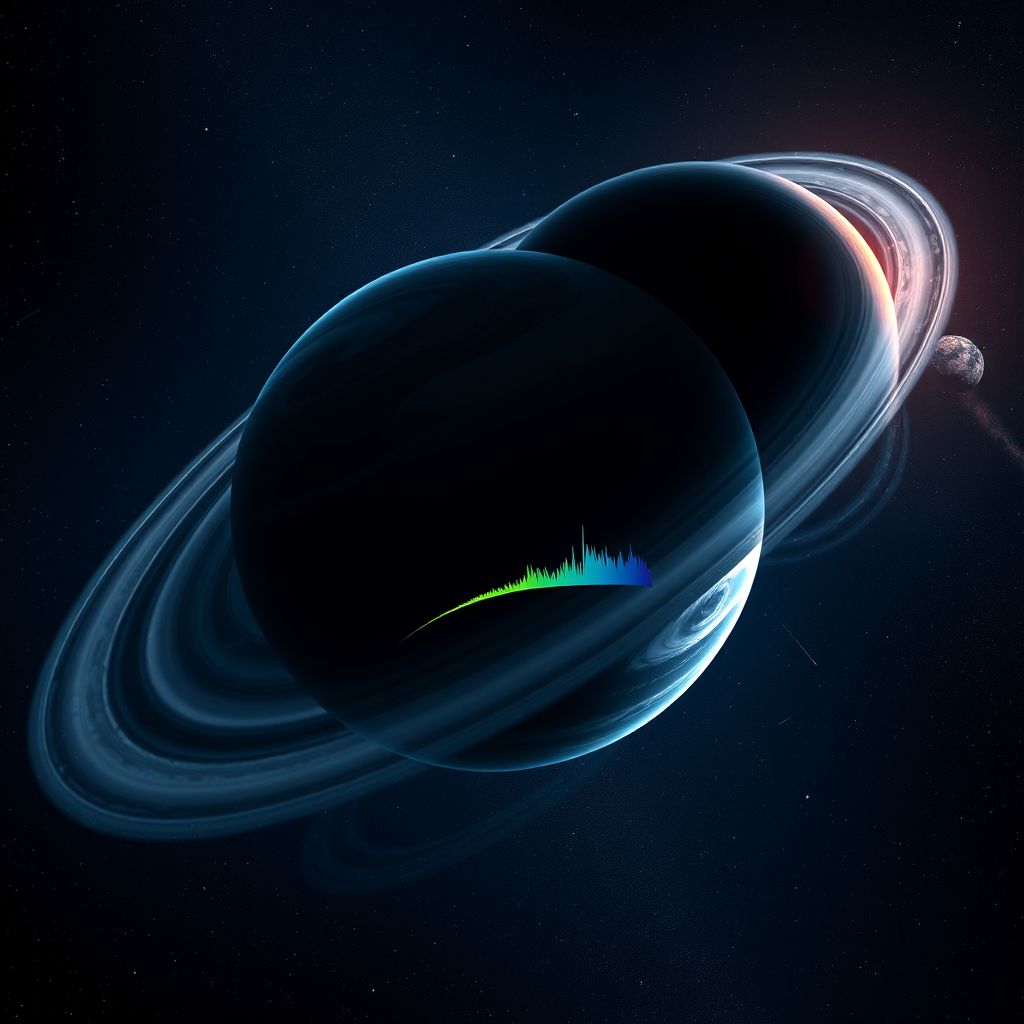
Exoplanet Atmospheres Analyzed by Space Telescopes are revolutionizing our understanding of distant worlds beyond our solar system. By leveraging advanced technology, researchers can now study the atmospheric compositions of exoplanets with unprecedented precision, unlocking new insights into their potential to harbor life and revealing the diversity of planetary systems in our galaxy. This article delves deep into how these cutting-edge tools are enabling us to peer through interstellar space, uncovering the secrets held within the atmospheres of far-off planets.
- Introduction to Exoplanet Atmospheres Analyzed by Space Telescopes
- The Importance of Studying Exoplanet Atmospheres
- Key Technologies Used in the Analysis of Exoplanet Atmospheres
- How Space Telescopes Contribute to Our Understanding of Distant Worlds
- Case Studies: Notable Discoveries Made Through Atmospheric Analysis
- Future Directions in the Study of Exoplanet Atmospheres
- Challenges and Limitations in Analyzing Distant Planetary Atmopsheres
- Conclusion: The Promise of Continued Exploration Through Space Telescopes
Introduction to Exoplanet Atmospheres Analyzed by Space Telescopes
The field of exoplanetary science has seen significant advancements in recent years, largely due to the ability to analyze the atmospheres of planets orbiting other stars. This capability is crucial for understanding planetary environments and assessing their potential habitability. Exoplanet Atmospheres Analyzed by Space Telescopes provide a window into these distant worlds, allowing us to gather data on chemical compositions, temperature profiles, and even weather patterns.
The Importance of Studying Exoplanet Atmospheres
Studying exoplanet atmospheres is vital for several reasons. Firstly, it helps in identifying the presence of gases such as carbon dioxide, methane, and water vapor, which are key indicators of planetary conditions conducive to life. Secondly, atmospheric analysis can reveal information about a planet’s history and evolution, offering clues about its formation process and environmental changes over time.
Pro Tip: When analyzing exoplanet atmospheres, look for biosignatures – chemical signals that may indicate the presence of living organisms or processes related to them. These are particularly exciting as they hint at potential habitable zones around distant stars.
Key Technologies Used in the Analysis of Exoplanet Atmospheres
To study exoplanet atmospheres effectively, a range of sophisticated technologies and techniques are employed. Spectroscopy is one such method that involves breaking down light into its component wavelengths to detect specific chemical signatures.
- High-resolution spectrographs can distinguish between atmospheric gases based on their unique spectral lines.
Another crucial technology is coronagraphy, which blocks out the overwhelming glare of a star so that fainter planetary companions and their atmospheres can be observed more clearly. Additionally, photometry measures changes in light intensity as an exoplanet passes in front of its host star, providing valuable insights into atmospheric composition.
Pro Tip: Utilizing multi-wavelength observations across different parts of the electromagnetic spectrum enhances our ability to discern subtle variations and features within exoplanetary atmospheres. This comprehensive approach provides a more robust analysis framework.
How Space Telescopes Contribute to Our Understanding of Distant Worlds
Space telescopes like the Hubble, Kepler, and soon the James Webb Space Telescope (JWST) play an indispensable role in analyzing exoplanet atmospheres. These instruments orbit above Earth’s atmosphere, offering clearer views of distant stars and their planetary systems without atmospheric interference.
- The JWST is particularly noteworthy due to its advanced capabilities for observing near- and mid-infrared wavelengths, ideal for studying cooler and farther planets whose signatures would otherwise be obscured by solar radiation.
By capturing high-resolution images and spectra of exoplanets, space telescopes enable researchers to measure atmospheric properties such as pressure, temperature, and density. They also facilitate the detection of clouds, hazes, and even weather phenomena like storms or rain showers on distant worlds.
- The Cosmic Origins Spectrograph aboard Hubble has been instrumental in probing the atmospheres of transiting exoplanets across a broad wavelength range, contributing significantly to our knowledge base.
Pro Tip: Regular maintenance and upgrades for space telescopes ensure they remain at peak performance levels, maximizing their scientific output over extended periods.
Case Studies: Notable Discoveries Made Through Atmospheric Analysis
A number of groundbreaking discoveries have been made possible through the analysis of exoplanet atmospheres. For instance, observations of HD 189733b revealed methane and water vapor in its atmosphere, marking it as one of the first instances where such molecules were detected outside our solar system.
- Another noteworthy case is TRAPPIST-1e, a terrestrial-sized exoplanet with potentially habitable conditions. Spectral analysis has suggested the presence of carbon dioxide and possibly other gases indicative of an atmosphere rich in volatiles.
Furthermore, studies conducted on K2-18b have indicated water vapor within its envelope, hinting at the possibility of liquid water existing on or near its surface – a critical factor for assessing habitability criteria. Each discovery builds upon previous knowledge and pushes us closer to identifying potentially habitable planets.
- Scientists continue to refine their methodologies and techniques as more exoplanets are discovered, allowing for increasingly detailed and nuanced analyses of these distant worlds.
Future Directions in the Study of Exoplanet Atmospheres
The future of exoplanetary science holds immense promise with ongoing advancements in technology and methodology. Upcoming missions like NASA’s TESS (Transiting Exoplanet Survey Satellite) and ESA’s CHEOPS (Characterising ExOPlanetSatellite) are poised to discover new worlds, expanding our sample size for atmospheric studies.
- Moreover, innovations such as the Extremely Large Telescope (ELT), set to be one of the largest optical/infrared telescopes ever constructed, will provide unprecedented spatial resolution and sensitivity.
The integration of machine learning algorithms into data analysis pipelines promises greater efficiency in processing vast datasets generated by these missions. As we continue to explore deeper into space, our understanding of exoplanet atmospheres is expected to grow exponentially.
- Collaborative efforts between international research communities will drive forward the pace and scope of discovery, fostering a global ecosystem of scientific inquiry.
Pro Tip: Engaging in interdisciplinary collaborations can yield novel insights and breakthroughs by combining perspectives from diverse fields such as astrophysics, atmospheric science, and biology.
Challenges and Limitations in Analyzing Distant Planetary Atmopsheres
Despite remarkable progress, challenges persist in analyzing exoplanet atmospheres. One significant hurdle is the inherent faintness of planetary light compared to their host stars, making direct observation extremely difficult.
- This issue is exacerbated when studying planets orbiting close to brighter stars or those located at greater distances from us.
Data interpretation also presents complexities due to the vast range of possible atmospheric compositions and configurations. Researchers must account for factors like stellar variability, instrument noise, and potential biases in observational techniques.
- To address these challenges, robust calibration methods and rigorous data validation protocols are essential.
Pro Tip: Emphasizing quality control measures during every stage of the research process helps maintain integrity and reliability of findings concerning exoplanet atmospheres.
Conclusion: The Promise of Continued Exploration Through Space Telescopes
The exploration of Exoplanet Atmospheres Analyzed by Space Telescopes represents a frontier in astronomical research, opening up new avenues for scientific inquiry and discovery. As we push the boundaries of what is possible with current technology and look towards future advancements, there remains an enormous potential to unravel mysteries about our place in the cosmos.
- The next decade promises exciting developments in this field as more powerful telescopes come online and existing facilities undergo upgrades.
Ultimately, continued investment in space-based observatories will be crucial for advancing our understanding of exoplanet atmospheres. The collective efforts of researchers worldwide are propelling us towards a future where we can confidently assess the habitability of distant planets beyond our own solar system.
- The journey ahead is one filled with both challenges and opportunities, driving us ever closer to comprehending the myriad possibilities that lie within the vast expanse of space.

- OrginCosmic
- Interstellar Probes and the Future of Space Exploration March 27, 2026
- How Supernovae Shape Galaxy Evolution March 27, 2026
- Unexplained Transient Astronomical Events March 27, 2026
- The Role of Dark Energy in Cosmic Evolution March 27, 2026
- Vacuum Decay: A Doomsday Scenario for the Universe? March 27, 2026