What Are Intermediate-Mass Black Holes?
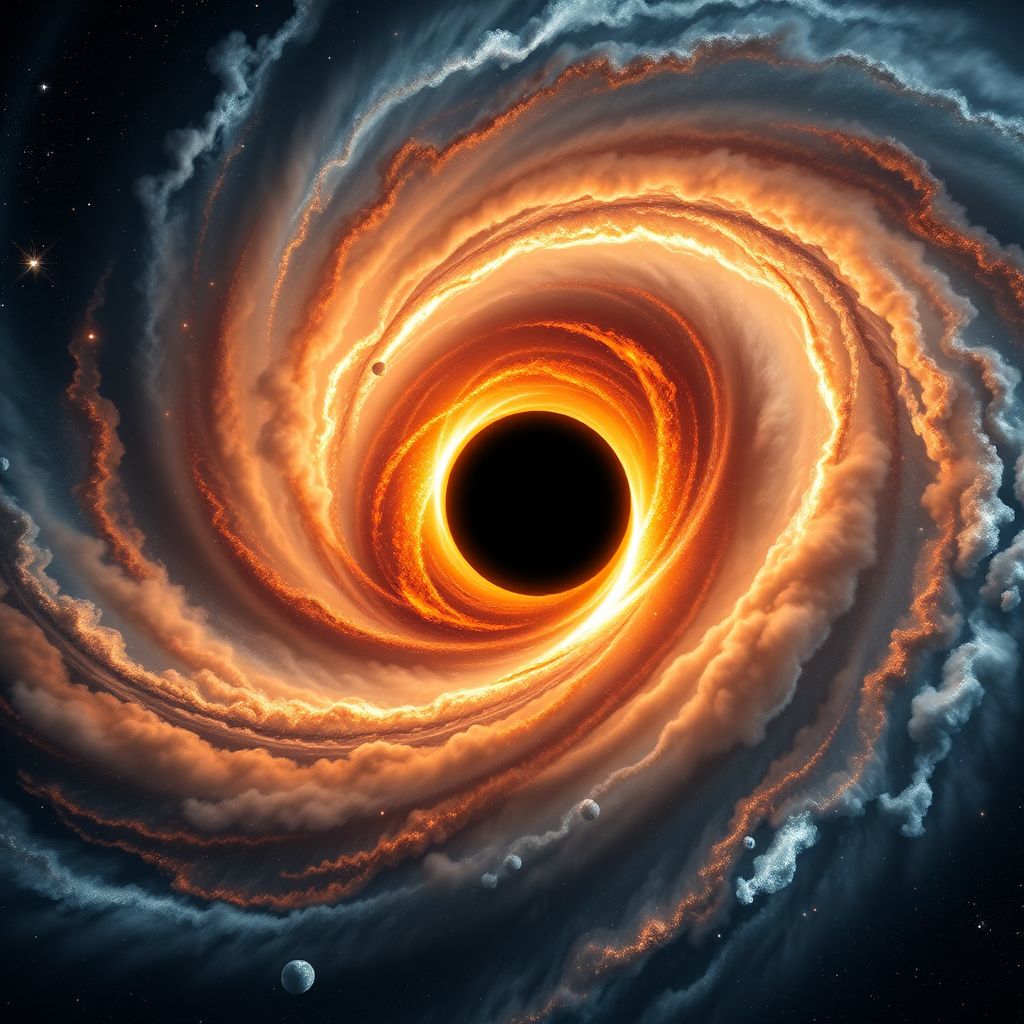
Intermediate-mass black holes represent an intriguing puzzle in the cosmos for astronomers and astrophysicists alike. What are intermediate-mass black holes, exactly? These cosmic entities fall into a niche category between stellar black holes and supermassive black holes, possessing masses that range from 100 to 100,000 solar masses. Understanding what are intermediate-mass black holes is crucial as they could provide invaluable clues about the formation and evolution of galaxies.
Table of Contents
What Are Intermediate-Mass Black Holes?
The term intermediate-mass black holes (IMBHs) encompasses a specific range of stellar objects that bridge the gap between smaller, stellar-sized black holes and supermassive black holes found at the centers of galaxies. The mass range for IMBHs is approximately 100 to 100,000 solar masses, making them intriguing subjects in astrophysics due to their unique properties and potential roles in cosmic phenomena.
Intermediate-mass black holes are a bridge between two extremes: they can be the result of stellar evolution processes similar to those producing stellar-sized black holes, or they could form through entirely different mechanisms that lead to supermassive black holes. This dual nature presents challenges for both observation and theoretical understanding.
Stellar-Origin Models
One theory proposes that IMBHs arise from the collapse of massive stars in dense stellar clusters, leading to a series of mergers over cosmic timescales. These systems often exhibit high levels of gas and dust, making them challenging environments for direct observation.
Direct Collapse Hypotheses
Alternatively, some IMBHs might form through the direct collapse of primordial gas clouds that bypass the star formation stage entirely. This scenario is particularly relevant in the early universe and could explain the rapid growth of supermassive black holes seen in distant quasars.
Theoretical Models for Formation
The origin of intermediate-mass black holes remains a subject of intense debate among scientists. Theorists have proposed several mechanisms by which these enigmatic objects could form, each with its own set of observational predictions and challenges.
Stellar Evolution Models
One prominent theory suggests that IMBHs arise from the end stages of stellar evolution within dense clusters. Massive stars can collide or merge to produce intermediate-mass black holes, particularly in environments rich with gas and dust. This process is akin to how smaller black holes form but on a larger scale.
Primordial Collapse Hypotheses
Another hypothesis involves the direct collapse of pristine gas clouds without passing through a star-forming phase. In such scenarios, IMBHs could serve as seeds for supermassive black holes seen in high-redshift quasars.
Observational Evidence and Discovery Methods
The detection of intermediate-mass black holes remains a significant challenge due to their elusive nature. However, recent advancements in observational astronomy have provided some promising leads. X-ray observations from space telescopes like Chandra and XMM-Newton have identified several candidates believed to be IMBHs based on their radiation signatures.
X-Ray Sources
X-ray emissions are one of the primary methods used by astronomers to detect intermediate-mass black holes. These emissions occur when matter from nearby stars spirals into the black hole, heating up and emitting intense radiation in the X-ray spectrum.
Gravitational Wave Detectors
The detection of gravitational waves offers another avenue for studying IMBHs. The Laser Interferometer Space Antenna (LISA) mission, scheduled to launch in the mid-2030s, will be capable of detecting the mergers of these enigmatic objects.
Role in Galaxy Evolution
Intermediate-mass black holes are thought to play a crucial role in galaxy formation and evolution. They may act as seeds for supermassive black holes at galactic centers, influencing the growth of galaxies through feedback mechanisms.
Seeding Supermassive Black Holes
IMBHs are believed to serve as initial conditions or “seeds” from which supermassive black holes grow. Understanding their formation and evolution is essential for comprehending the entire lifecycle of galaxies.
Galactic Feedback Mechanisms
The interaction between IMBHs and surrounding matter can regulate star formation within galaxies, thereby affecting their overall structure and dynamics over time. This feedback process is critical in explaining the observed correlation between galaxy mass and central black hole mass.
Challenges to Studying Intermediate-Mass Black Holes
Despite considerable progress, many obstacles still hinder our ability to study intermediate-mass black holes effectively. These challenges include limitations in observational technology, the need for more accurate theoretical models, and the inherent difficulties associated with detecting objects that emit very little observable radiation.
Observational Limitations
The detection of IMBHs is complicated by their often weak electromagnetic signatures. Advanced telescopic instruments and innovative observational techniques are necessary to overcome these limitations.
Theoretical Model Enhancements
Improving theoretical models through simulations and numerical studies will enhance our understanding of IMBH formation and evolution, leading to more accurate predictions for future observations.
Recent Research and Developments
The field of intermediate-mass black hole research has seen significant advancements in recent years. New observational data from various space missions, coupled with theoretical breakthroughs, have shed light on the properties and behavior of these elusive objects.
Observational Breakthroughs
Space missions such as XMM-Newton and Chandra continue to deliver valuable insights into IMBH candidates. These observations are crucial for validating theoretical models and refining our understanding of black hole demographics across cosmic history.
Theoretical Insights
Theorists have made strides in developing more sophisticated simulations that incorporate the complex physics governing intermediate-mass black holes, from accretion processes to interactions within dense stellar environments. These advancements pave the way for a more comprehensive picture of IMBH behavior.
Future Prospects in Astronomy
The study of intermediate-mass black holes holds immense promise for future astronomical research. As technology advances and new observational platforms become available, we can expect to uncover even more about these mysterious cosmic entities.
With the advent of next-generation telescopes like the James Webb Space Telescope (JWST) and ground-based observatories such as the Giant Magellan Telescope (GMT), our ability to probe deep into space will be greatly enhanced. These tools promise unprecedented views of distant IMBHs, potentially revealing new insights into their origins and evolution.
In conclusion, understanding what are intermediate-mass black holes is crucial for advancing our knowledge of galaxy formation and the broader context of cosmic evolution. Continued research in this area promises to unlock many secrets about the universe’s most enigmatic objects.

- OrginCosmic
- Interstellar Probes and the Future of Space Exploration March 27, 2026
- How Supernovae Shape Galaxy Evolution March 27, 2026
- Unexplained Transient Astronomical Events March 27, 2026
- The Role of Dark Energy in Cosmic Evolution March 27, 2026
- Vacuum Decay: A Doomsday Scenario for the Universe? March 27, 2026