Fast-Moving Stars Escaping Our Galaxy
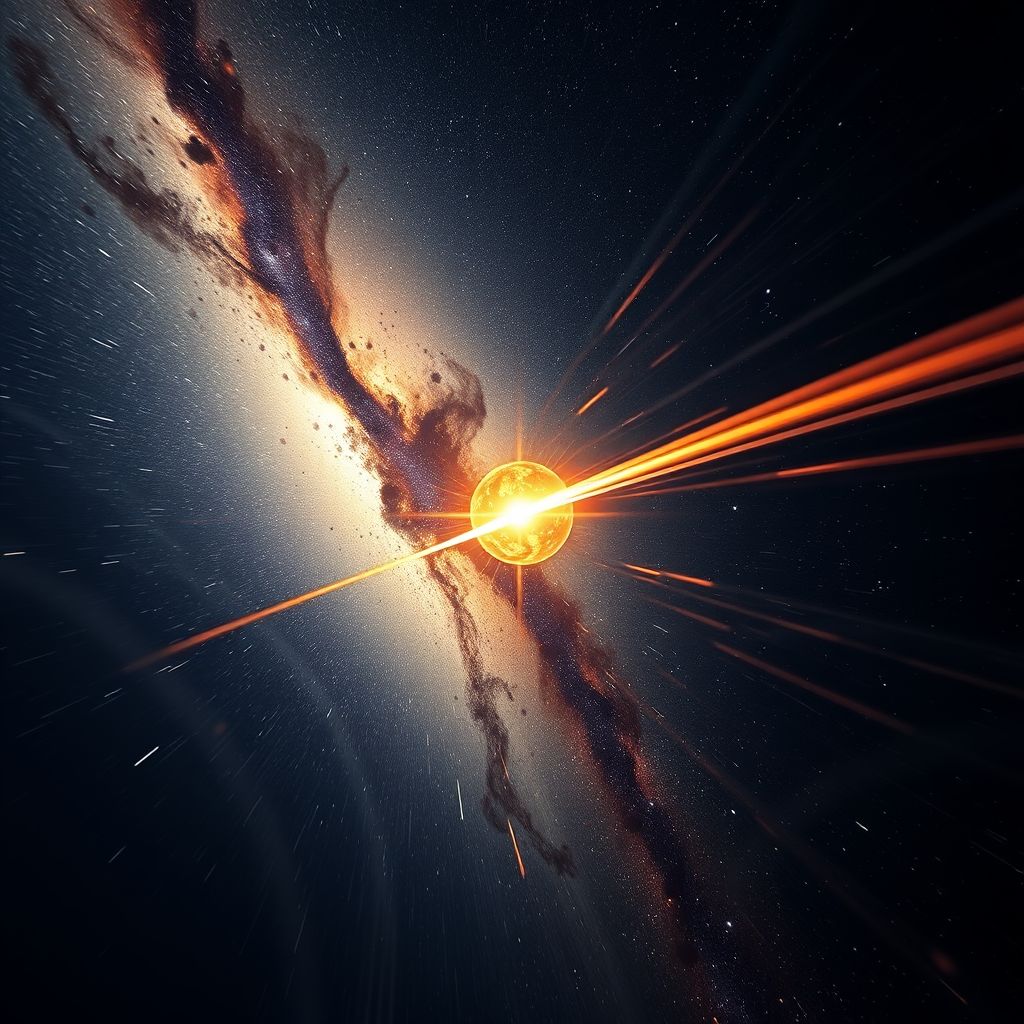
Fast-moving stars escaping our galaxy are a rare phenomenon that has intrigued astronomers for decades. These celestial objects travel at breakneck speeds, often exceeding 1000 kilometers per second, and leave their home galaxy to roam through intergalactic space. Understanding the dynamics of fast-moving stars escaping our galaxy is crucial not only for unraveling the mysteries of galactic evolution but also for providing insights into the cosmic events that shape the universe we observe today.
- Understanding Fast-Moving Stars Escaping Our Galaxy
- The Role of Supernovae in Star Ejection
- Star Clusters and Gravitational Interactions
- Detection Techniques for Fast-Moving Stars
- Implications of Star Escape on Galactic Dynamics
- Case Study: Hypervelocity Stars and the Milky Way’s Halo
- Observational Challenges in Studying Fast-Moving Stars Escaping Our Galaxy
- Future Directions for Research on Star Ejection Phenomenon
Understanding Fast-Moving Stars Escaping Our Galaxy
Fast-moving stars escaping our galaxy are a subset of hypervelocity stars (HVSs) that achieve velocities high enough to overcome the gravitational pull of their parent galaxies. These HVSs can originate from various mechanisms, including interactions within dense star clusters or encounters with supermassive black holes at galactic centers.
The first detection of such stars was made in 2005 by Origin Cosmic, a pioneering organization dedicated to unraveling the mysteries of our universe. Since then, numerous studies have been conducted to understand their origins and properties.
Properties of Fast-Moving Stars Escaping Our Galaxy
HVSs typically exhibit several distinctive characteristics:
- Broad velocity distributions: HVSs can travel at speeds up to 1,000 km/s or more.
- Metallicity variations: Many fast-moving stars are metal-poor compared to their galactic counterparts.
- Orbital dynamics: Trajectories often indicate a history of extreme gravitational encounters.
The Role of Supernovae in Star Ejection
Supernova explosions are one of the primary mechanisms for ejecting stars from their host galaxies. During such events, massive stars undergo catastrophic collapse and explosion, releasing immense amounts of energy that can impart high velocities to nearby stars.
Proximity Effects in Supernova Explosions
- Causal proximity: Stars near a supernova site may experience significant kicks from the shockwave.
- Dynamics of ejection: The velocity imparted depends on the mass and radius of the exploding star.
Star Clusters and Gravitational Interactions
In dense stellar environments, gravitational interactions play a crucial role in ejecting stars from their clusters. These interactions can result in ejection events that propel stars out of the galaxy.
Dynamics Within Star Clusters
- Close encounters: Binary systems and tight-knit star groups contribute to high-velocity ejections.
- Three-body interactions: Complex gravitational dynamics can lead to escape velocities for some stars.
Detection Techniques for Fast-Moving Stars Escaping Our Galaxy
To detect fast-moving stars, astronomers use a variety of observational techniques. Spectroscopy and photometry are essential tools in identifying these high-speed objects across vast cosmic distances.
Observational Approaches
- Spectroscopic surveys: Measure radial velocities to identify candidates moving at extreme speeds.
- Panoramic imaging: Wide-field cameras capture large swathes of sky for comprehensive searches.
Implications of Star Escape on Galactic Dynamics
The escape of fast-moving stars from galaxies has profound implications for understanding the overall structure and evolution of galactic systems. These ejection events can influence the mass distribution, chemical enrichment, and even the shape of a galaxy.
Morphological Impacts
- Galactic halos: Ejected stars contribute to the formation and growth of extended halo structures.
- Disk perturbations: The loss of stars can lead to instabilities in galactic disks.
Case Study: Hypervelocity Stars and the Milky Way’s Halo
A notable case study involves the detection of hypervelocity stars within the halo region of our Milky Way galaxy. These stars, traveling at speeds far exceeding typical galactic velocities, provide insights into the violent processes that shaped our local universe.
Data and Observations
- Spectral analysis: Detailed spectroscopic studies confirm high-velocity status.
- Motion patterns: Traces of past interactions with dense stellar clusters or black holes.
Observational Challenges in Studying Fast-Moving Stars Escaping Our Galaxy
The study of fast-moving stars poses several challenges. From technological limitations to the sheer vastness of space, astronomers must overcome numerous hurdles to unravel these celestial phenomena.
Main Obstacles
- Instrument sensitivity: Detecting dim objects at great distances requires advanced instrumentation.
- Data processing complexity: Analyzing vast datasets for rare, high-velocity events is computationally intensive.
Future Directions for Research on Star Ejection Phenomenon
Ongoing research aims to refine our understanding of fast-moving stars escaping our galaxy. Advanced telescopes and computational models will play critical roles in advancing this field, potentially revealing new insights into the dynamic processes shaping our universe.
Next Steps for Investigation
- New observatories: Upcoming facilities promise improved detection capabilities.
- Theoretical models: Enhanced simulations will better predict star ejection scenarios.
In conclusion, the study of fast-moving stars escaping our galaxy is a fascinating area of research with far-reaching implications for astrophysics. By unraveling the mysteries behind these celestial objects, we deepen our understanding of galactic evolution and cosmic events that have shaped the universe as we know it today.

- OrginCosmic
- Interstellar Probes and the Future of Space Exploration March 27, 2026
- How Supernovae Shape Galaxy Evolution March 27, 2026
- Unexplained Transient Astronomical Events March 27, 2026
- The Role of Dark Energy in Cosmic Evolution March 27, 2026
- Vacuum Decay: A Doomsday Scenario for the Universe? March 27, 2026