Transient Events in the Night Sky Explained
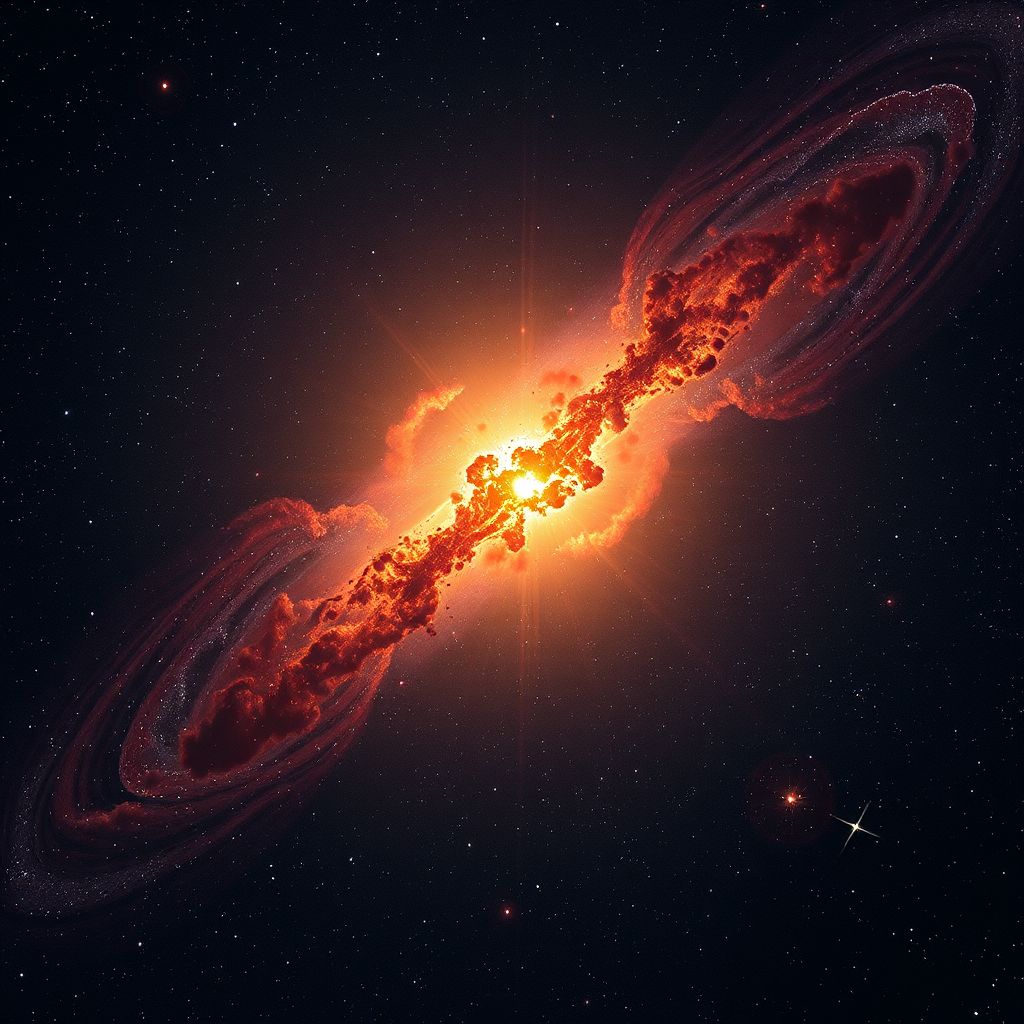
Transient events in the night sky are captivating phenomena that attract both amateur astronomers and seasoned professionals alike. These fleeting occurrences can provide insights into some of the most powerful processes in our universe, from supernovae explosions to fast radio bursts. In this comprehensive guide, we’ll explore what transient events are, how they’re observed, and why understanding them is crucial for advancing astronomical research.
- What Are Transient Events in the Night Sky?
- Types of Transient Events
- How to Observe Transient Events
- The Importance of Studying Transients
- Technology and Instrumentation for Transient Event Detection
- Case Studies of Significant Transient Events
- Future Prospects in the Field of Transients
What Are Transient Events in the Night Sky?
Transient events in the night sky explained are astronomical phenomena that occur suddenly and may last for only a short period of time. Unlike fixed objects like stars or planets, these events change over time and provide unique opportunities to study dynamic processes within our universe.
Definition and Characteristics
Astronomical transients are celestial objects that exhibit unexpected changes in brightness, position, or spectral characteristics. They can appear suddenly and fade quickly, making them challenging but rewarding targets for observation. These events often represent the most energetic processes in the cosmos.
Types of Transient Events
Transient phenomena come in various forms, each offering unique insights into different areas of astrophysics. Below are some common types:
- Supernovae: The explosive death of a massive star.
- Kilonova Explosions: Result from the collision of two neutron stars.
- Gamma-Ray Bursts (GRBs): Intense bursts of gamma radiation.
- Luminous Red Novae: Produced by mergers between white dwarfs or neutron stars.
How to Observe Transient Events
Observing transient events requires specialized knowledge and equipment. Here’s a step-by-step guide:
Equipment and Tools
- Telescopes: Robotic telescopes are ideal for automated observations.
- Spectrometers: For detailed analysis of the light spectrum.
- Cameras and Detectors: High-sensitivity CCD cameras capture faint signals.
Techniques and Methodologies
- Differential Imaging: Compares images from different times to detect changes.
- Automatic Alerts: Systems like Origin Cosmic send notifications when new transients are detected.
- Data Analysis Software: Tools like Python libraries (Astropy, Lightkurve) aid in processing observational data.
The Importance of Studying Transients
Understanding transient events is crucial for advancing our knowledge about the universe:
Insights into Cosmology and Astronomy
- Dark Energy Studies: GRBs help map distant galaxies.
- Star Formation and Evolution: Supernovae reveal the lifecycle of stars.
Technology and Instrumentation for Transient Event Detection
Advances in technology have greatly enhanced our ability to study transient events:
Robotic Telescopes
- Automated Observations: Robotic telescopes like Pan-STARRS and the Zwicky Transient Facility continuously monitor large areas of sky.
- Data Sharing: Real-time data sharing among international observatories speeds up discoveries.
Case Studies of Significant Transient Events
Several notable transient events have made significant contributions to astronomy:
GRB 090423
The burst detected on April 23, 2009, was the most distant object ever observed at that time, providing valuable insights into early star formation.
Future Prospects in the Field of Transients
Exciting advancements are on the horizon:
Next Generation Telescopes
- Large Synoptic Survey Telescope (LSST): Will conduct a decade-long survey of the entire Southern sky, discovering millions of new transients.
- Wide Field Infrared Survey Telescope (WFIRST): Equipped with advanced instruments for deep space exploration.
In conclusion, transient events in the night sky explained provide critical insights into astrophysical processes and cosmological mysteries. By embracing new technologies and collaborative efforts, we can continue to unravel the secrets of our universe through these fleeting cosmic phenomena.

- OrginCosmic
- Interstellar Probes and the Future of Space Exploration March 27, 2026
- How Supernovae Shape Galaxy Evolution March 27, 2026
- Unexplained Transient Astronomical Events March 27, 2026
- The Role of Dark Energy in Cosmic Evolution March 27, 2026
- Vacuum Decay: A Doomsday Scenario for the Universe? March 27, 2026