Supernovae: Star Explosions That Create Heavy Elements
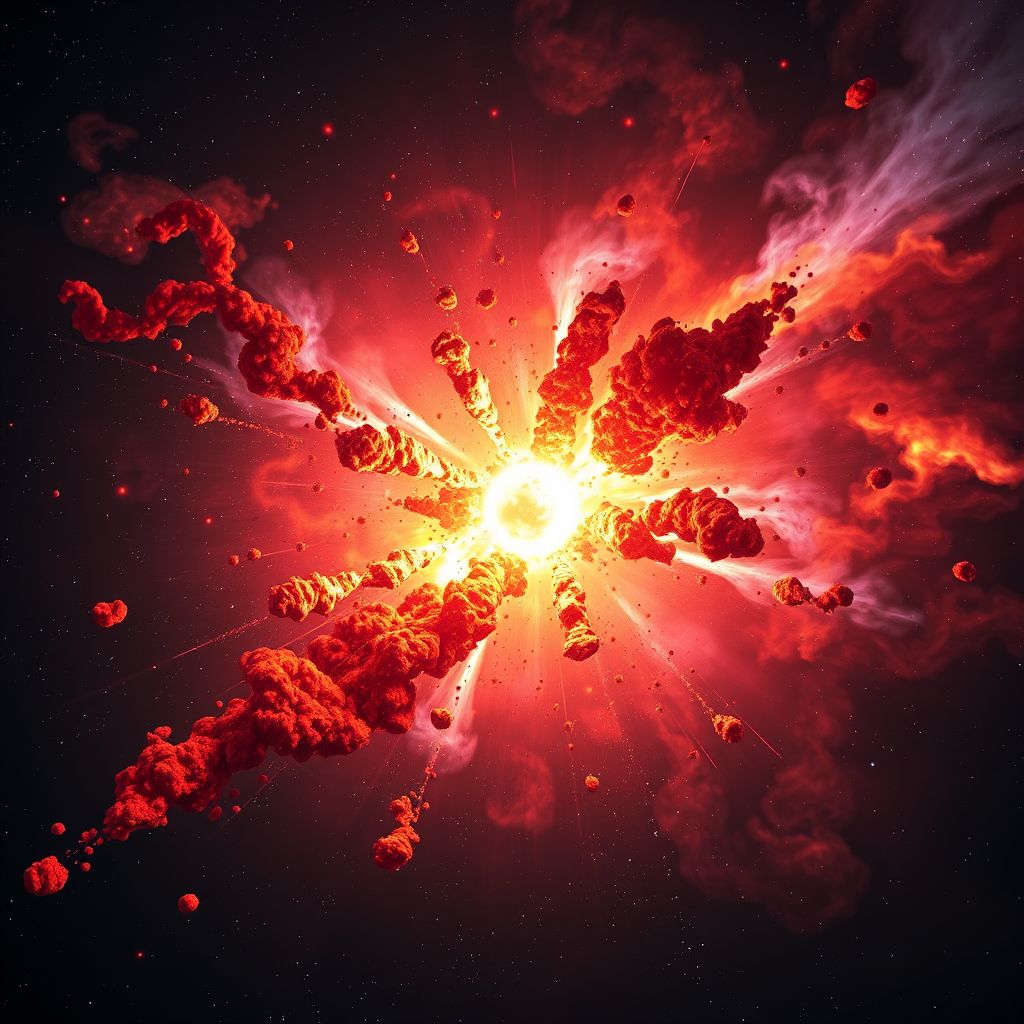
Supernovae: Star Explosions That Create Heavy Elements are among the most spectacular events in the universe, marking the end of a star’s life cycle with an incredible burst of energy that can outshine entire galaxies for weeks or months at a time. These cosmic phenomena not only signal the dramatic finale of massive stars but also play a crucial role in the creation and distribution of heavy elements throughout the cosmos. In this article, we will delve into the intricate mechanisms behind supernovae explosions, their impact on galactic evolution, and how they contribute to the formation of everything from planets to organic molecules.
Understanding Supernovae: Star Explosions That Create Heavy Elements
Supernovae are astronomical events that occur when a massive star collapses in an explosive manner after exhausting its nuclear fuel. There are two main types of supernovae, each with distinct mechanisms and outcomes:
Type Ia Supernovae
Type Ia supernovae result from the explosion of white dwarfs within binary star systems, where a white dwarf accretes material from its companion until it reaches a critical mass threshold. At this point, nuclear burning ignites, leading to a runaway fusion process that causes the star to explode.
Core-Collapse Supernovae
Core-collapse supernovae occur when massive stars (over eight solar masses) run out of fuel and their cores collapse under gravity. This results in an explosion so powerful it can scatter heavy elements across the galaxy.
The Role of Supernovae in Heavy Element Formation
Supernova explosions are one of the primary sources for synthesizing and dispersing heavy elements in the universe. During these cataclysmic events, nucleosynthesis processes create a wide range of atomic nuclei that would otherwise not form naturally.
Nucleosynthesis Processes
The rapid neutron capture process (r-process) is particularly important for producing heavy elements beyond iron. This occurs when neutrons are rapidly captured by nuclei, leading to the formation of highly unstable isotopes that eventually decay into stable, heavier elements.
Distribution and Recycling
Following a supernova explosion, newly formed heavy elements are ejected into space where they can seed future star systems. This process enriches interstellar medium with metals crucial for planetary formation.
Observational Evidence of Supernovae: Star Explosions That Create Heavy Elements
Since ancient times, supernovae have been observed as “new stars” in the night sky. Modern astronomy uses various methods to study these phenomena:
Spectroscopy and Photometry
Spectroscopic analysis of supernova light allows astronomers to determine chemical compositions, while photometric observations track changes over time.
Supernovae Remnants
Studying remnants such as the Crab Nebula provides insights into nucleosynthesis processes and how elements are dispersed in space.
Impact on Galactic Evolution
The role of supernovae in galactic evolution cannot be overstated. They influence star formation rates, regulate galaxy morphology through feedback mechanisms, and enrich interstellar medium with essential heavy elements.
Regulation of Star Formation
Supernova explosions can trigger further star formation by compressing gas clouds into dense regions conducive to stellar birth.
Galaxy Morphology and Evolution
The collective effects of multiple supernovae over cosmic timescales shape the structural development of galaxies, contributing to their varied appearances observed today.
Supernova Explosions and Planetary Systems
Heavy elements from supernovae are critical for planetary formation and the emergence of life-supporting conditions. These elements form building blocks necessary for planets and organic compounds.
Formation of Rocky Planets
The abundance of heavy metals in protoplanetary disks influences planet composition, affecting both terrestrial and giant planets.
Organic Molecules Synthesis
Some supernova ejecta contain complex organic molecules that could be precursors to life as we know it on Earth.
Future Prospects in Supernovae Research
Ongoing advancements in observational technology and theoretical models continue to expand our understanding of supernovae. Future missions aim at capturing more detailed images and spectra, enhancing our comprehension of these cosmic wonders.
Next Generation Telescopes
Upcoming telescopes like the James Webb Space Telescope will provide unprecedented views into distant galaxies hosting ancient supernovae.
Conclusion: Key Takeaways on Supernovae: Star Explosions That Create Heavy Elements
In conclusion, supernovae play a pivotal role in shaping not only our galaxy but also the broader cosmos by synthesizing and distributing heavy elements vital for planetary formation and potentially even life itself. As we continue to explore the universe’s mysteries, these spectacular events will undoubtedly remain at the forefront of astronomical research.
- Understanding Supernovae: Star Explosions That Create Heavy Elements
- The Role of Supernovae in Heavy Element Formation
- Observational Evidence of Supernovae: Star Explosions That Create Heavy Elements
- Impact on Galactic Evolution
- Supernova Explosions and Planetary Systems
- Future Prospects in Supernovae Research
- Conclusion: Key Takeaways on Supernovae: Star Explosions That Create Heavy Elements

- OrginCosmic
- Interstellar Probes and the Future of Space Exploration March 27, 2026
- How Supernovae Shape Galaxy Evolution March 27, 2026
- Unexplained Transient Astronomical Events March 27, 2026
- The Role of Dark Energy in Cosmic Evolution March 27, 2026
- Vacuum Decay: A Doomsday Scenario for the Universe? March 27, 2026