Supermassive Black Holes at the Center of Galaxies
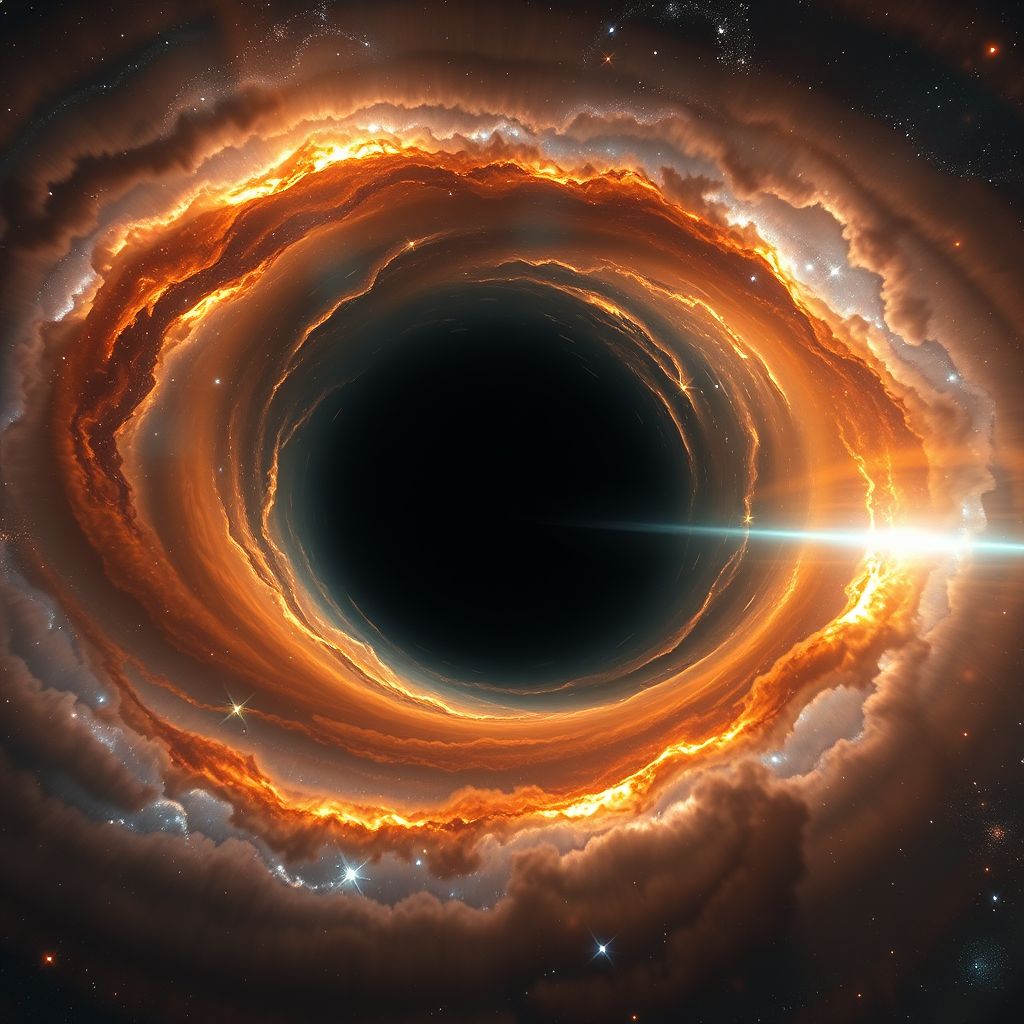
The universe harbors some of its most fascinating phenomena at the core of galaxies, where supermassive black holes reign supreme. Supermassive Black Holes at the Center of Galaxies are not just astronomical curiosities but also key players in galactic evolution and cosmic dynamics. This article delves into the mysteries surrounding these gravitational giants, exploring their formation, impact on star formation, and implications for our understanding of dark matter and energy.
- Introduction to Supermassive Black Holes at the Center of Galaxies
- Formation and Evolution of Supermassive Black Holes
- Influence on Galaxy Formation and Star Birth
- Observational Techniques: Probing the Secrets of Galaxies
- Current Research and Future Prospects
- Interactions with Dark Matter and Energy
- Implications for Astrobiology and the Search for Life Beyond Earth
- Conclusion: The Role of Supermassive Black Holes in Shaping the Universe
Introduction to Supermassive Black Holes at the Center of Galaxies
Supermassive black holes, as their name suggests, are among the largest and most massive known objects in the universe. These cosmic behemoths can have masses ranging from millions to billions times that of our Sun, dwarfing even the most colossal stars. At the heart of nearly every large galaxy lies such a supermassive black hole, exerting its gravitational pull on surrounding matter and influencing galactic dynamics. Understanding these enigmatic objects is crucial for unraveling the mysteries of cosmic evolution.
According to recent studies, there is overwhelming evidence that galaxies and their central supermassive black holes co-evolve over billions of years. This interplay shapes not only the structure and growth of galaxies but also has profound implications for star formation within these galactic systems.
Formation and Evolution of Supermassive Black Holes
The birth and evolution of supermassive black holes remain one of the most intriguing questions in astrophysics. Theories suggest that these giant voids can originate from smaller stellar-mass black holes or directly from massive gas clouds through direct collapse scenarios. Both processes involve the accretion of vast amounts of matter, leading to an exponential growth driven by gravitational forces.
Accretion Disk Theory
The process of accretion involves the gradual accumulation of dust and gas onto a black hole’s surface as it orbits in a swirling disk called an accretion disk. As material falls into this disk, friction causes it to heat up, emitting intense X-ray radiation observable by astronomers using specialized telescopes.
Feedback Mechanisms
Supermassive black holes also regulate their growth through powerful jets and winds that expel matter back into space, creating feedback loops. These outflows can significantly impact the surrounding interstellar medium (ISM), inhibiting star formation in nearby regions.
Influence on Galaxy Formation and Star Birth
The relationship between supermassive black holes and galaxy evolution is complex and multifaceted, with each influencing the other. For instance, when a massive black hole accretes matter at extremely high rates—referred to as an active galactic nucleus (AGN)—it releases tremendous energy that can suppress star formation in its host galaxy.
Conversely, some evidence suggests that supermassive black holes may also stimulate star birth under certain conditions. For example, the gravitational tidal forces exerted by a growing black hole can compress nearby gas clouds, triggering bursts of star creation known as starbursts.
Observational Techniques: Probing the Secrets of Galaxies
Studying supermassive black holes requires advanced observational techniques. One such method is gravitational microlensing, where light from distant stars or galaxies bends around a foreground object like a massive black hole due to gravity. This bending acts as a natural magnifying glass, allowing scientists to detect and analyze otherwise invisible cosmic structures.
Another crucial tool for astronomers is the use of X-ray observatories such as NASA’s Chandra X-Ray Observatory and ESA’s XMM-Newton satellite. These instruments enable researchers to map out regions around supermassive black holes by detecting high-energy radiation produced during accretion events.
Current Research and Future Prospects
Recent advancements in observational astronomy have opened up new avenues for studying supermassive black holes. For instance, the Event Horizon Telescope (EHT) collaboration successfully captured the first-ever image of a black hole’s event horizon—the point beyond which nothing can escape its gravitational pull—in 2019.
Future Missions
Looking ahead, upcoming space missions like ESA’s Euclid and NASA’s Wide Field Infrared Survey Telescope (WFIRST) promise to revolutionize our understanding of these enigmatic objects. These projects aim to map large portions of the universe in unprecedented detail, providing critical data for modeling galaxy formation and evolution.
Interactions with Dark Matter and Energy
The interplay between supermassive black holes and dark matter remains a topic of intense scientific investigation. Some theories propose that these massive voids could serve as repositories for significant amounts of dark matter, potentially explaining discrepancies observed in galaxy rotation curves.
Moreover, the relationship between supermassive black holes and dark energy is also under scrutiny. Dark energy drives the accelerated expansion of the universe, yet its precise nature remains elusive. Some hypotheses suggest that the sheer massiveness of black holes could influence cosmic dynamics on cosmological scales.
Implications for Astrobiology and the Search for Life Beyond Earth
The study of supermassive black holes extends beyond purely astrophysical realms, impacting fields such as astrobiology. By understanding how these celestial giants shape their environments, researchers can better assess conditions conducive to life elsewhere in the cosmos.
For example, certain regions near active galactic nuclei might harbor unique chemical compositions and physical states that could facilitate or inhibit the emergence of complex organic molecules necessary for biological processes.
Conclusion: The Role of Supermassive Black Holes in Shaping the Universe
In conclusion, supermassive black holes at the center of galaxies play a crucial role in shaping cosmic structures and driving fundamental physical processes. From regulating star formation to influencing galaxy evolution and potentially interacting with dark matter and energy, these enigmatic objects continue to captivate scientists across various disciplines.
As we continue to probe deeper into the mysteries of black holes through advanced telescopes and cutting-edge research techniques, our understanding of their profound impacts on the universe will undoubtedly expand. For further insights into the cosmos and its most mysterious inhabitants, visit OriginCosmic.

- OrginCosmic
- Interstellar Probes and the Future of Space Exploration March 27, 2026
- How Supernovae Shape Galaxy Evolution March 27, 2026
- Unexplained Transient Astronomical Events March 27, 2026
- The Role of Dark Energy in Cosmic Evolution March 27, 2026
- Vacuum Decay: A Doomsday Scenario for the Universe? March 27, 2026