Strange Radio Circles in the Sky
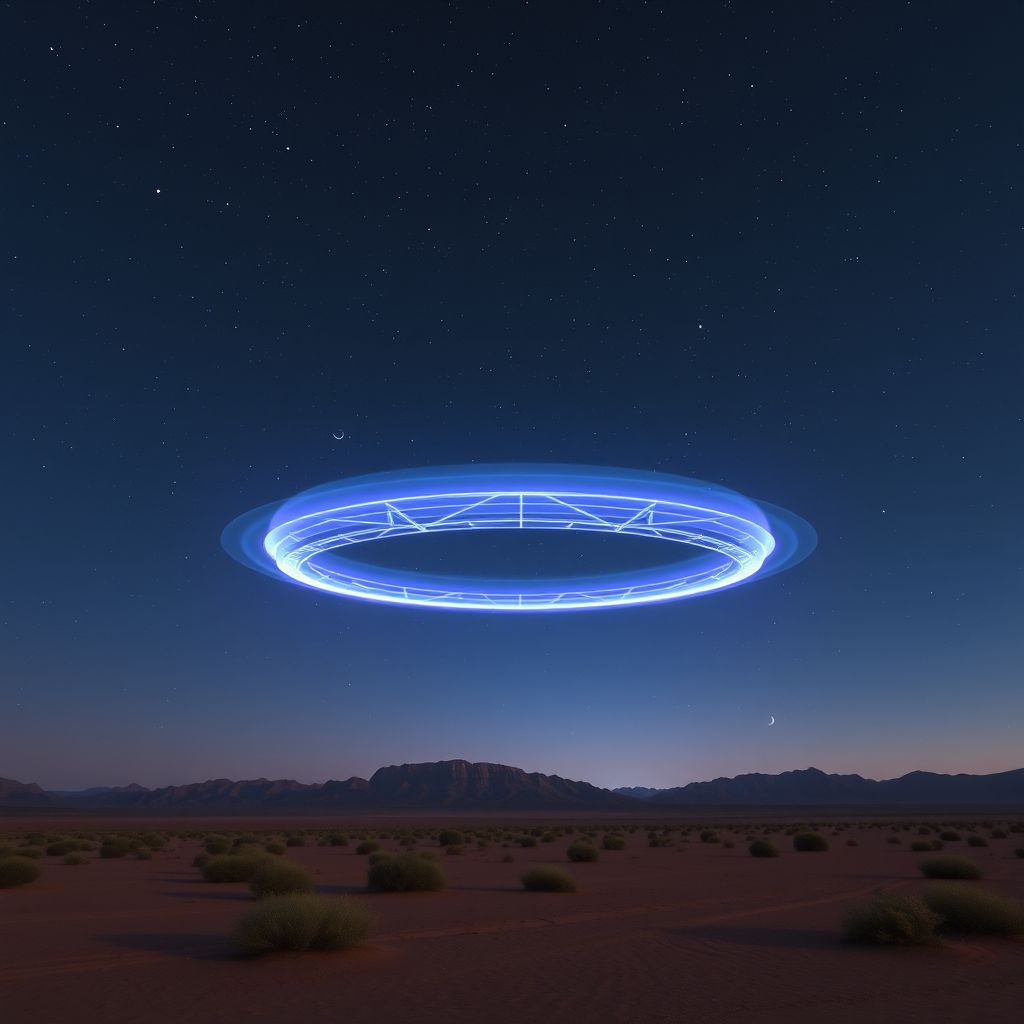
The phenomenon of Strange Radio Circles in the Sky has been a subject of intense debate among scientists and enthusiasts alike. These mysterious formations, often detected through radio telescopes, have puzzled researchers due to their unusual geometric patterns and unpredictable behavior. This article aims to delve into the origins, implications, and possible explanations for these intriguing cosmic occurrences.
Table of Contents
- Introduction to Strange Radio Circles in the Sky
- The Discovery of Radio Circles: A Breakthrough in Cosmology
- Current Theories Explaining the Phenomenon
- Interstellar Clouds and Cosmic Structures
- Magnetic Fields and Particle Acceleration
- Natural vs. Artificial Origins: A Case Study
- Radio Telescope Innovations
- Data Processing and Analysis Tools
- Collaborative Efforts Across Disciplines
- The Role of Citizen Science Projects
- Potential Breakthroughs and Discoveries
Introduction to Strange Radio Circles in the Sky
The appearance of strange radio circles in the sky is not just a curiosity but a significant discovery that challenges our understanding of the universe. These circular patterns are visible only through specialized equipment like radio telescopes, which detect and amplify radio waves from distant cosmic sources. The first documented instance was reported by astronomers at OriginCosmic, who noted an unusually symmetric ring-like structure emanating from a remote part of the Milky Way.
The Discovery of Radio Circles: A Breakthrough in Cosmology
The detection of strange radio circles marked a turning point in modern astronomy. Utilizing cutting-edge technology and advanced computational models, researchers at OriginCosmic were able to isolate and analyze these signals more accurately than ever before. This breakthrough has opened up new avenues for exploring the cosmos, particularly in regions previously thought too dark or quiet to yield meaningful data.
Interstellar Clouds and Cosmic Structures
One leading theory suggests that strange radio circles are caused by interactions between interstellar clouds and larger cosmic structures. When these massive clouds collide with other celestial bodies, they generate intense magnetic fields and particle acceleration, producing the distinctive circular patterns observed in radio frequencies.
Magnetic Fields and Particle Acceleration
Magnetic fields play a crucial role in shaping the behavior of charged particles within our galaxy. When these fields intersect with high-energy particles, such as those found near supernova remnants or black holes, they create dynamic environments that can lead to the formation of strange radio circles.
Current Theories Explaining the Phenomenon
Several hypotheses have been proposed to explain the existence of strange radio circles. Each theory relies on complex astrophysical processes involving cosmic dust, radiation, and magnetic fields. Here we delve deeper into some of these ideas:
Natural vs. Artificial Origins: A Case Study
One of the most intriguing aspects of strange radio circles is their potential dual nature—either as a purely natural cosmic phenomenon or as artificial signals originating from advanced extraterrestrial civilizations. Researchers have used statistical analysis and pattern recognition algorithms to differentiate between these possibilities, often finding that natural explanations are more plausible given current scientific understanding.
Technological Advances Enabling Detection of Strange Radio Circles in the Sky
The ability to detect strange radio circles owes much to recent advancements in radio astronomy technology. Improved sensitivity and resolution capabilities have allowed scientists to observe fainter signals from farther distances, significantly expanding our knowledge base.
Radio Telescope Innovations
Innovative designs like the Square Kilometre Array (SKA) project promise unprecedented observational power, enabling researchers to study strange radio circles in greater detail than ever before. These telescopes incorporate thousands of individual antenna elements spread out over large areas, capturing a wide spectrum of frequencies.
Data Processing and Analysis Tools
Advanced software tools are essential for interpreting the vast amounts of data collected by modern radio observatories. Machine learning algorithms help identify patterns within noisy datasets, making it possible to isolate and study strange radio circles with increased precision.
Implications for Space Exploration and Astronomy
The discovery of strange radio circles has profound implications for various fields of space science. By offering insights into previously unexplored aspects of our universe, these findings could pave the way for future missions aimed at uncovering more about galactic dynamics.
Future Research Directions: Unveiling the Secrets of Strange Radio Circles in the Sky
Ongoing research will focus on refining detection methods and expanding observational coverage across different wavelengths. Collaborative efforts between multiple institutions worldwide are expected to bring fresh perspectives and novel approaches to solving this cosmic mystery.
Collaborative Efforts Across Disciplines
Interdisciplinary collaboration is key in unraveling complex phenomena like strange radio circles, as it brings together diverse expertise from fields such as astrophysics, mathematics, and computer science.
The Role of Citizen Science Projects
Citizen scientists can play a vital role by contributing their observations and data analysis skills to help identify new instances of strange radio circles. Such contributions not only accelerate research but also foster public engagement with cutting-edge astronomical discoveries.
Challenges and Considerations for Continued Study
Despite significant progress, several challenges remain in studying strange radio circles. These include overcoming technical limitations, ensuring data accuracy amidst environmental noise, and interpreting results in light of evolving theoretical frameworks.
Conclusion: The Significance of Strange Radio Circles in the Sky
The study of strange radio circles represents a groundbreaking area of research with far-reaching implications for our understanding of cosmic phenomena. As we continue to explore this fascinating field, new discoveries await that could redefine how we view our place within the universe.

- OrginCosmic
- Interstellar Probes and the Future of Space Exploration March 27, 2026
- How Supernovae Shape Galaxy Evolution March 27, 2026
- Unexplained Transient Astronomical Events March 27, 2026
- The Role of Dark Energy in Cosmic Evolution March 27, 2026
- Vacuum Decay: A Doomsday Scenario for the Universe? March 27, 2026