Pulsar Timing Arrays for Detecting Gravitational Waves
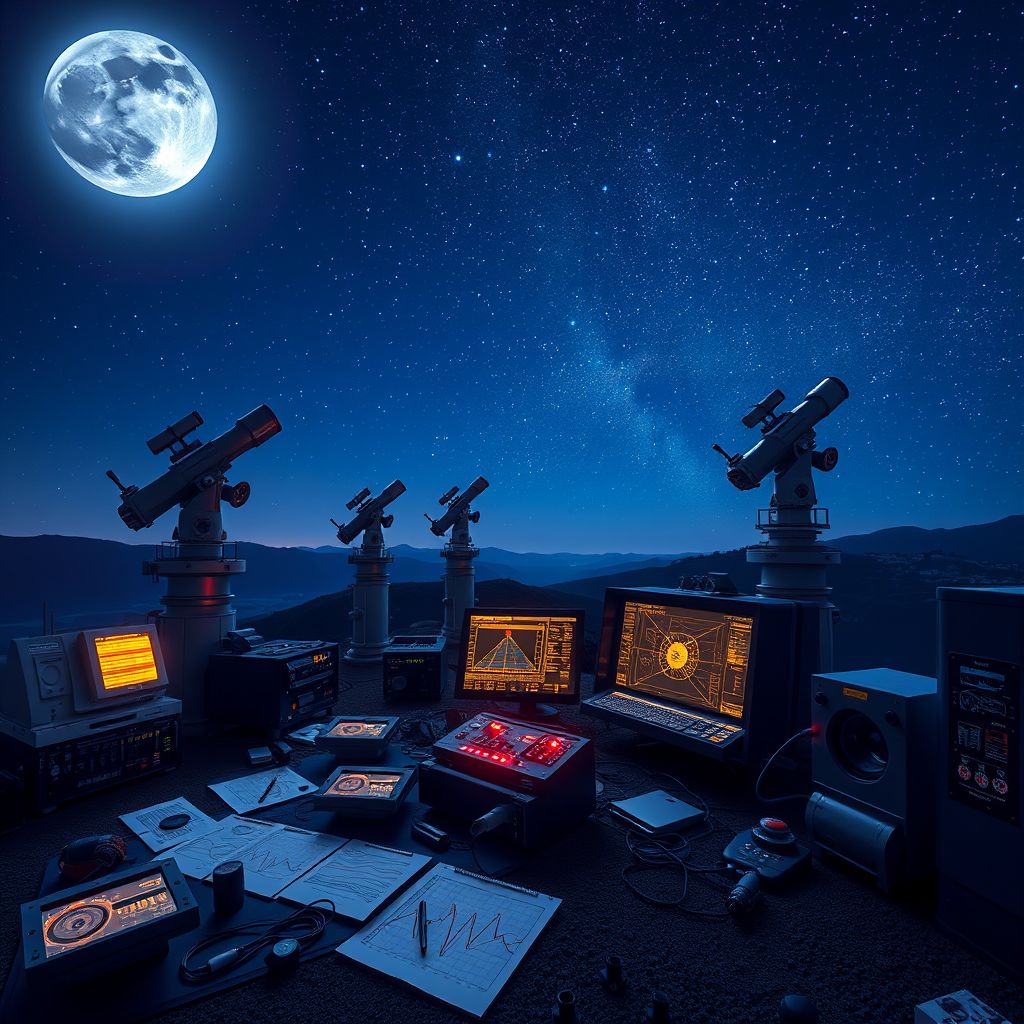
Pulsar Timing Arrays for Detecting Gravitational Waves are a cutting-edge astronomical tool that enables scientists to study some of the most powerful cosmic events in the universe, such as collisions between supermassive black holes and neutron stars. These arrays offer an unparalleled opportunity to explore the mysteries of space-time by detecting faint signals that carry invaluable information about the dynamics of our cosmos.
- Understanding Gravitational Waves
- Introduction to Pulsar Timing Arrays for Detecting Gravitational Waves
- The Technology Behind Pulsar Timing Arrays
- Detecting Low-Frequency Gravitational Waves
- Pulsar Timing Arrays and Multimessenger Astronomy
- Challenges in Pulsar Timing Array Research
- Current Projects and Future Prospects for Pulsar Timing Arrays for Detecting Gravitational Waves
- Collaboration with Other Scientific Communities
Understanding Gravitational Waves
The concept of gravitational waves, first predicted by Albert Einstein’s general theory of relativity, has been a cornerstone in the field of physics. These ripples in the fabric of space-time are produced when massive objects undergo extreme accelerations, such as black hole mergers or neutron star collisions. While these events are incredibly energetic and powerful, gravitational waves themselves are incredibly weak, making their detection extremely challenging.
Despite the challenges, scientists have developed highly sensitive instruments like interferometers to detect high-frequency gravitational waves from sources such as colliding binary systems of compact objects. However, for lower frequency signals—those in the range of nanohertz frequencies—a different approach is necessary: Pulsar Timing Arrays for Detecting Gravitational Waves.
Introduction to Pulsar Timing Arrays for Detecting Gravitational Waves
Pulsars are highly magnetized, rapidly rotating neutron stars that emit beams of electromagnetic radiation from their magnetic poles. These emissions can be detected as periodic pulses by radio telescopes on Earth. By measuring the precise arrival times of these pulses with extreme accuracy—often to within a few millionths of a second—scientists can detect minute variations caused by passing gravitational waves.
Pulsar Timing Arrays (PTAs) consist of networks of highly stable millisecond pulsars distributed across the sky, each monitored over long periods. By combining data from multiple pulsars, PTAs can average out noise and isolate the subtle changes in pulse timing that indicate a passing gravitational wave signal.
Key Components of PTA
- Pulsar Selection: Choosing millisecond pulsars with stable rotation periods is crucial. These pulsars are typically older, more massive, and have less activity at their magnetic poles, leading to more regular pulse timing.
- Data Collection: Advanced radio telescopes collect data over years or even decades. The Green Bank Telescope in West Virginia, the Parkes Observatory in Australia, and the Arecibo Observatory (before its collapse) are some of the facilities involved.
- Signal Processing: Sophisticated algorithms analyze timing residuals to detect anomalies that could be due to gravitational waves.
The Technology Behind Pulsar Timing Arrays for Detecting Gravitational Waves
The technology required for PTAs is both complex and precise. To achieve the necessary accuracy, radio telescopes must operate with exceptional stability over long periods. Here are some key technological advancements that enable PTAs:
Radio Telescopes
Modern radio telescopes like the Square Kilometre Array (SKA) in South Africa and Australia can capture extremely weak signals from distant pulsars. The SKA, once fully operational, will offer unparalleled sensitivity and resolution.
Data Analysis Techniques
- Time-of-Arrival Data: Precise measurements of the time of arrival (TOA) are crucial for detecting gravitational wave signals. Each pulsar must be observed at multiple radio frequencies to reduce noise.
- Frequent Calibration: Regular calibration is essential to maintain accuracy, as even small changes in telescope performance can affect TOA measurements.
Detecting Low-Frequency Gravitational Waves with Pulsar Timing Arrays for Detecting Gravitational Waves
The primary advantage of PTAs is their ability to detect low-frequency gravitational waves, which are beyond the reach of ground-based interferometers. These lower frequency signals typically originate from massive black hole binaries or supermassive black holes in galactic nuclei.
Signal Detection Challenges
- Noise Reduction: Background noise can obscure weak gravitational wave signals. Advanced data processing and long-term observation are essential for filtering out this noise.
- Data Interpolation: Incomplete or missing data points can distort signal detection. Techniques like cubic spline interpolation help maintain accuracy even with gaps in the observational record.
Recent Achievements
In 2016, the North American Nanohertz Observatory for Gravitational Waves (NANOGrav) project detected potential gravitational waves from a supermassive black hole binary system. This discovery marked a significant milestone in the field of PTAs.
Pulsar Timing Arrays and Multimessenger Astronomy
The advent of Pulsar Timing Arrays for Detecting Gravitational Waves has opened up new avenues for multimessenger astronomy, combining gravitational wave observations with other forms of cosmic messengers like neutrinos and electromagnetic radiation. This approach allows scientists to gain a more comprehensive understanding of cosmic events.
Case Study: GW170817
The detection of the first neutron star collision (GW170817) in 2017 provided a rare opportunity for multimessenger astronomy. The event was observed not only through gravitational waves but also via electromagnetic radiation across multiple wavelengths, including gamma rays and radio emissions.
Challenges in Pulsar Timing Array Research
Despite their promise, PTAs face several challenges that hinder their effectiveness:
- Data Quality Control: Ensuring the reliability of observational data is a continuous challenge. Each pulsar must be carefully monitored for changes in its emission pattern.
- Technological Limitations: Current radio telescopes have limitations, such as atmospheric interference and technical malfunctions, that can affect signal detection.
Current Projects and Future Prospects for Pulsar Timing Arrays for Detecting Gravitational Waves
The future of PTAs looks promising with ongoing projects like the Square Kilometre Array (SKA) and the International Pulsar Timing Array (IPTA). The SKA, when fully operational, will provide unprecedented sensitivity and resolution.
Future Prospects
- Expanding Telescope Networks: Building a global network of radio telescopes to increase coverage and improve detection accuracy.
- Synthesis with Other Instruments: Combining data from PTAs with other gravitational wave detectors, such as LIGO and Virgo, will provide complementary insights into cosmic phenomena.
Collaboration with Other Scientific Communities
The success of Pulsar Timing Arrays for Detecting Gravitational Waves relies heavily on collaboration across various scientific disciplines. By working together, astronomers, physicists, and engineers can develop innovative solutions to the challenges faced by PTAs.
Pro Tip:
- Interdisciplinary Collaboration: Encourage researchers from different fields to share knowledge and resources for a more holistic approach to cosmic studies. For instance, insights gained from particle physics experiments at CERN can inform PTA technology improvements.
In conclusion, Pulsar Timing Arrays for Detecting Gravitational Waves represent a vital tool in the quest to understand our universe’s most enigmatic phenomena. As these technologies continue to advance and new projects come online, we are poised on the brink of significant discoveries that will reshape our understanding of space-time dynamics.
To learn more about cutting-edge astronomical tools and innovative research initiatives, visit Origincosmic.com.

- OrginCosmic
- Interstellar Probes and the Future of Space Exploration March 27, 2026
- How Supernovae Shape Galaxy Evolution March 27, 2026
- Unexplained Transient Astronomical Events March 27, 2026
- The Role of Dark Energy in Cosmic Evolution March 27, 2026
- Vacuum Decay: A Doomsday Scenario for the Universe? March 27, 2026