Mars Mysteries: Evidence of Ancient Life?
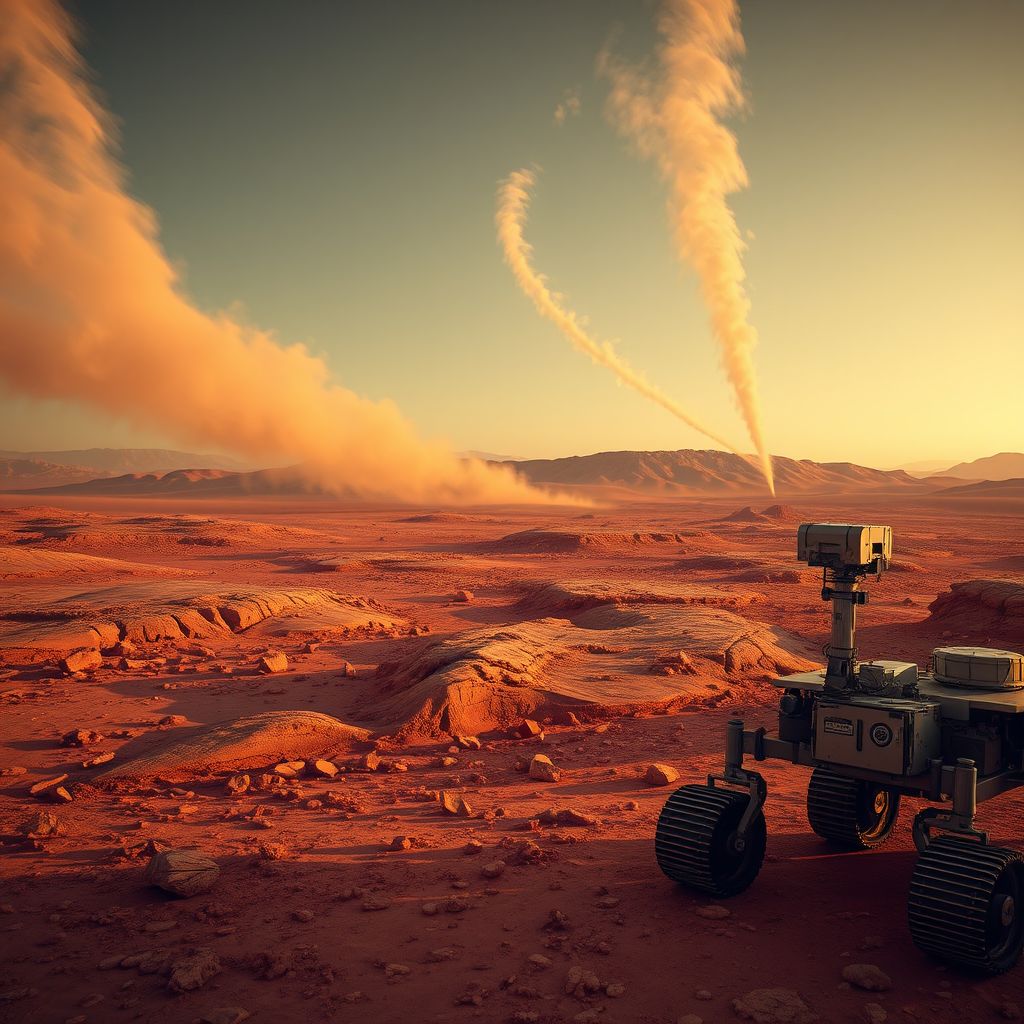
Since ancient times, Mars has captivated humanity with its striking red hue in the night sky, symbolizing mystery and allure. The planet’s surface appears barren and inhospitable, yet it teems with secrets waiting to be uncovered. Among these enigmas lies one of the most compelling questions in planetary science: Mars Mysteries: Evidence of Ancient Life? This article delves deep into the current scientific evidence pointing towards a possible past existence of microbial life on Mars.
- Introduction to Mars and Its Mysteries
Mars Mysteries: Evidence of Ancient Life?
- Key Scientific Discoveries on Mars
- The Possibility of Past Water Flow and Its Implications
- Mars Missions: Searching for Signs of Life
- Current Theories on Microbial Life in Extreme Environments
- Technological Advances and Future Prospects
- Challenges Ahead: Exploring the Red Planet’s Secrets
- Conclusion
Mars Mysteries: Evidence of Ancient Life?
The search for evidence of ancient life on Mars has been a cornerstone of planetary exploration since the 1960s. The discovery of methane in the Martian atmosphere by various missions, including NASA’s Curiosity rover, sparked intense debate among scientists about the potential existence of microbial life beneath the planet’s surface.
One compelling piece of evidence is the presence of organic molecules on Mars. Organic compounds can form from non-biological processes as well as through biological means. However, their discovery suggests that conditions were once suitable for life to exist on the planet. The Curiosity rover has detected these complex organic molecules in rocks dating back billions of years.
Organic Molecules and Their Significance
The identification of organic molecules by the Mars Science Laboratory (MSL) team is a critical step towards understanding past Martian environments. Organic compounds are essential building blocks for life as we know it on Earth, raising intriguing possibilities about their presence on other planets.
Key Scientific Discoveries on Mars
Since the first successful mission to land a spacecraft on Mars in 1976, numerous discoveries have been made that challenge our understanding of this distant world. Some of these findings include:
- The discovery of hematite and other iron oxides suggesting ancient water flow.
- The identification of clay minerals indicating the past presence of standing bodies of water.
The Possibility of Past Water Flow and Its Implications
Water is an essential ingredient for life as we know it. Evidence from orbiters and rovers has revealed extensive networks of ancient river valleys, deltas, and lake beds on Mars, suggesting that the planet was once covered in liquid water.
River Valleys and Lake Beds
High-resolution images have shown numerous channels carved by flowing water. These features are similar to those found on Earth where rivers cut through rock over long periods of time, indicating that Mars also experienced prolonged wet conditions in its past.
Mars Missions: Searching for Signs of Life
Several missions dedicated to investigating the potential habitability and signs of life on Mars have been launched. These include:
- The Phoenix lander, which found ice in soil samples.
- The Curiosity rover, focusing on Gale Crater where it has discovered clay minerals that formed from ancient lakes.
Curiosity’s Role in Uncovering Mars’ Past Environments
Curiosity’s analysis of rock samples at various locations around the crater provides crucial insights into Martian history, suggesting a wetter and possibly more hospitable environment billions of years ago.
Current Theories on Microbial Life in Extreme Environments
The study of extremophiles—microorganisms living under extreme conditions here on Earth—provides parallels for understanding how life might have evolved or persisted on Mars. These include organisms surviving under high pressure, radiation levels, and temperature extremes.
Extremophile Research and Its Relevance to Martian Exploration
Understanding the capabilities of extremophiles helps scientists design better instruments for detecting signs of life in harsh environments like those on Mars. Techniques such as DNA sequencing and isotopic analysis are key tools in this endeavor.
Technological Advances and Future Prospects
Futuristic technologies aim to enhance our ability to detect and study potential microbial activity on Mars, including new robotic explorers designed with more sophisticated analytical capabilities. These advancements will play a crucial role in unraveling the mysteries of Mars.
Future Missions: The Next Steps
Upcoming missions such as Mars Sample Return, planned to bring Martian rock and soil samples back to Earth, promise unprecedented opportunities for detailed study. These samples could provide definitive evidence about the planet’s habitability in its ancient past.
Challenges Ahead: Exploring the Red Planet’s Secrets
While significant progress has been made, numerous challenges remain before we can conclusively determine whether life ever existed on Mars. These include overcoming technical limitations and ensuring continued investment in space exploration programs.
Addressing Technological Limitations
Innovative solutions are needed to improve our ability to search for biosignatures, including developing new instruments that can detect subtle signs of past or present microbial activity on Mars.
Conclusion
The quest to understand Mars Mysteries: Evidence of Ancient Life? continues to captivate scientists and the public alike. As we delve deeper into Martian history, each discovery brings us closer to answering this profound question.
To learn more about the origins and evolution of celestial bodies like Mars, visit Origin Cosmic. For a broader perspective on the financial implications of space exploration, consider reading articles from Wired Magazine.

- OrginCosmic
- Interstellar Probes and the Future of Space Exploration March 27, 2026
- How Supernovae Shape Galaxy Evolution March 27, 2026
- Unexplained Transient Astronomical Events March 27, 2026
- The Role of Dark Energy in Cosmic Evolution March 27, 2026
- Vacuum Decay: A Doomsday Scenario for the Universe? March 27, 2026