Hypervelocity Stars: Ejected from the Galactic Center
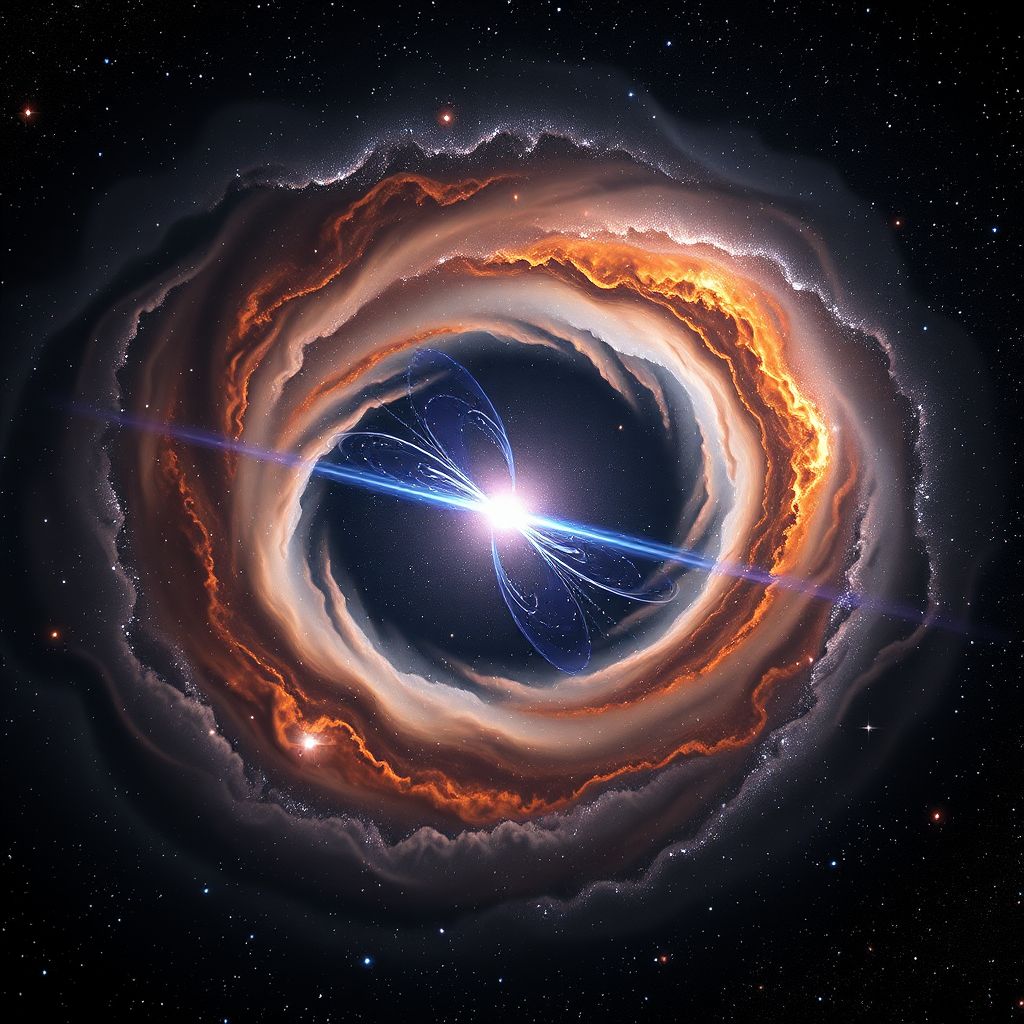
Hypervelocity stars are among the most intriguing phenomena in astrophysics today. These celestial bodies travel at extraordinary speeds, often exceeding 1000 kilometers per second, making them some of the fastest objects known to exist within our galaxy. A subset of these fascinating entities is a group that has been Hypervelocity Stars: Ejected from the Galactic Center. This article delves into the mechanisms behind their ejection, their observational evidence, and what these stars tell us about the dynamics at work in the heart of our Milky Way.
- What Are Hypervelocity Stars?
- Hypervelocity Stars: Ejected from the Galactic Center
- Theories Behind Their Origin
- Detection and Measurement of Hypervelocity Stars
- Implications for Stellar Dynamics
- Challenges in Studying These Outliers
- Future Prospects and Research Directions
What Are Hypervelocity Stars?
Hypervelocity stars are a class of stellar objects that travel at velocities significantly higher than typical stars in the galaxy. Their speeds often exceed 1000 km/s, enabling them to escape the gravitational pull of the Milky Way entirely. These stars are rare and have been discovered relatively recently, with the first confirmed hypervelocity star identified in the early 2000s.
Hypervelocity Stars: Ejected from the Galactic Center
The Hypervelocity Stars: Ejected from the Galactic Center represent a subset of these fast-moving stars that originate near the center of our galaxy. The Milky Way’s central black hole, Sagittarius A*, plays a crucial role in their formation and ejection.
Observational Evidence
The first evidence for hypervelocity stars was provided by spectroscopic observations that measured extremely high velocities. These measurements have confirmed the existence of these stellar bodies at distances far beyond what would be expected for regular galactic populations, indicating their origin from deeper within the Milky Way’s core.
Theories Behind Their Origin
There are several theoretical mechanisms proposed to explain how hypervelocity stars could originate near the Galactic Center and then be ejected at such high speeds. One prominent theory involves binary star systems that come too close to Sagittarius A*, leading to one member of the pair being captured by the black hole, while the other is violently flung away.
Binary Star Interactions
In this scenario, a binary system encounters Sagittarius A* and undergoes tidal disruption. The gravitational forces exerted by the supermassive black hole can disintegrate one star into stellar debris, sending its companion outwards at hypervelocity speeds.
Detection and Measurement of Hypervelocity Stars
The detection of hypervelocity stars is a challenging task due to their rarity and extreme distances. Astronomers rely on high-resolution spectroscopy and photometry to measure the radial velocities and proper motions of these objects accurately.
Observational Techniques
- Spectroscopy: This method uses the Doppler effect to measure the velocity of stars based on shifts in their spectral lines.
- Photometry: By monitoring the brightness changes over time, researchers can infer properties such as mass and temperature.
Implications for Stellar Dynamics
The study of hypervelocity stars offers profound insights into stellar dynamics within the Milky Way. These fast-moving objects act like cosmic probes that help us understand gravitational interactions, star formation rates in dense regions, and the overall structural evolution of galaxies.
Galactic Evolution Insights
Hypervelocity stars ejected from the Galactic Center can provide clues about past merger events between our galaxy and smaller satellite galaxies. Their trajectories and velocities can offer a historical record of these galactic interactions.
Challenges in Studying These Outliers
Despite their scientific importance, studying hypervelocity stars poses significant challenges due to their scarcity and the vast distances they travel from Earth. Technological advancements such as large telescopes with high-resolution spectrographs are crucial for overcoming these obstacles.
Tech Advancements Needed
- Advanced Spectroscopy Tools: Instruments like the European Southern Observatory’s Very Large Telescope (VLT) and upcoming Extremely Large Telescope (ELT) are essential for precise measurements of hypervelocity stars.
- Data Analysis Software: Complex data analysis tools capable of handling multi-wavelength observations will be indispensable in deciphering the mysteries surrounding these elusive celestial bodies.
Future Prospects and Research Directions
Future research on hypervelocity stars will likely focus on expanding our understanding of their origin, evolution, and implications for galactic structure. Ongoing surveys using advanced technology promise to uncover more of these rare objects and shed light on the enigmatic processes at play in the heart of galaxies.
Predicted Research Trends
Researchers anticipate an increasing number of discoveries as new observational campaigns come online, such as those planned by the Origins Cosmic Observatory. These projects aim to explore the universe’s origins and evolution through detailed studies of hypervelocity stars.
The Role of High-Resolution Imaging
High-resolution imaging techniques will play a crucial role in identifying new candidates for hypervelocity status. Such methods can detect fainter, faster-moving objects that might otherwise go unnoticed with less sensitive equipment.
In conclusion, the study of Hypervelocity Stars: Ejected from the Galactic Center provides a unique window into some of the most dynamic processes occurring within our galaxy. As astronomers continue to develop more sophisticated tools and techniques, we can expect significant advancements in our understanding of these cosmic phenomena.

- OrginCosmic
- Interstellar Probes and the Future of Space Exploration March 27, 2026
- How Supernovae Shape Galaxy Evolution March 27, 2026
- Unexplained Transient Astronomical Events March 27, 2026
- The Role of Dark Energy in Cosmic Evolution March 27, 2026
- Vacuum Decay: A Doomsday Scenario for the Universe? March 27, 2026