Gravitational Lensing: Nature’s Cosmic Magnifier
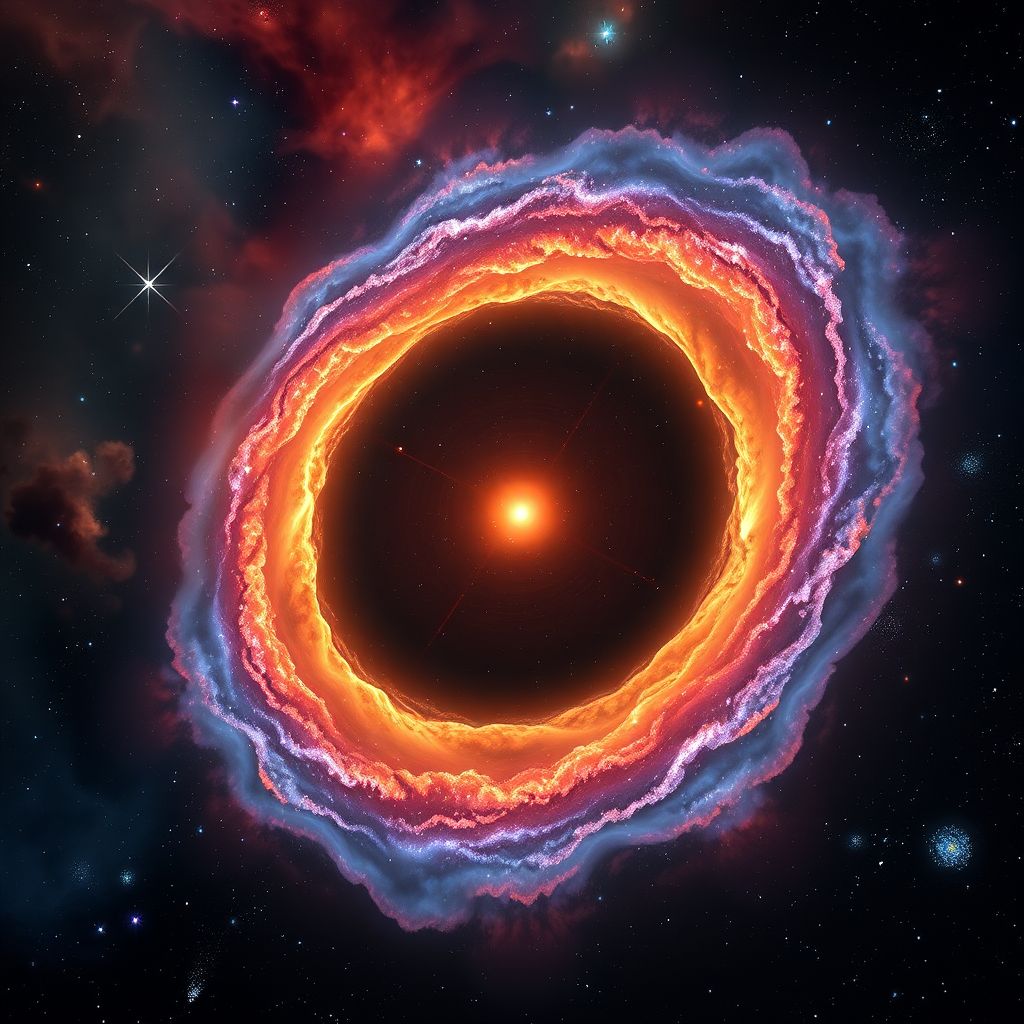
Gravitational Lensing: Nature’s Cosmic Magnifier is a remarkable phenomenon in astrophysics that allows scientists to study distant galaxies, quasars, and other celestial objects with unparalleled clarity. This effect was first predicted by Albert Einstein’s theory of general relativity and has since become an indispensable tool for cosmologists seeking to understand the universe on a grand scale. Through this lens, we can unravel mysteries of dark matter, test fundamental theories of physics, and even observe some of the most distant objects in the cosmos.
- Introduction to Gravitational Lensing: Nature’s Cosmic Magnifier
- The Theoretical Foundations
- Observational Techniques and Methods
- Key Discoveries Through Gravitational Lensing: Nature’s Cosmic Magnifier
- Applications in Cosmology and Astrophysics
- Challenges and Future Prospects
- Collaborative Efforts: Telescopes and Missions
- Conclusion
Introduction to Gravitational Lensing: Nature’s Cosmic Magnifier
Gravitational lensing is a fascinating cosmic magnification effect that bends and distorts the path of light due to massive objects in space. This phenomenon, which relies on the principles laid out by Einstein’s theory of general relativity, has revolutionized our understanding of the universe. By studying gravitational lenses, scientists can probe deep into the cosmos with enhanced clarity, revealing details about distant galaxies and dark matter distributions that would otherwise remain hidden.
Basic Concepts
The core principle behind gravitational lensing is that light travels along geodesics in spacetime. When a massive object such as a galaxy cluster intervenes between an observer on Earth and a more distant source, the path of the light bends around the intervening mass, much like how a glass lens refracts light.
The Theoretical Foundations
The theoretical framework for gravitational lensing is rooted in Einstein’s theory of general relativity. This groundbreaking theory posits that massive objects curve spacetime itself, causing light to follow curved paths rather than straight lines. Understanding these principles allows researchers to predict and detect the presence of unseen masses like dark matter.
Einstein’s Equations
The key equations from Einstein’s field equations describe how mass curves space-time. These are essential for modeling gravitational lensing effects accurately:
- Gμν = 8πTμν/c4: Describes the relationship between spacetime curvature and energy-momentum.
Observational Techniques and Methods
To study gravitational lensing effectively, scientists employ a variety of observational techniques. These include ground-based telescopes that capture visible light, as well as space missions like NASA’s Hubble Space Telescope which observes in the ultraviolet spectrum.
Ground-Based Observations
Pro Tip: Ground-based observatories often use adaptive optics to correct atmospheric distortion and enhance image clarity. These systems are crucial for detecting subtle changes caused by gravitational lensing.
Key Discoveries Through Gravitational Lensing: Nature’s Cosmic Magnifier
The study of gravitational lenses has led to numerous breakthroughs in astrophysics and cosmology. Notably, it has helped confirm the existence of dark matter by revealing its influence on galaxy formation and structure.
Dark Matter Mapping
Gravitational lensing enables astronomers to map out regions rich with dark matter. By analyzing how light from distant galaxies is distorted as it passes near clusters of galaxies, scientists can infer the distribution of unseen mass.
Applications in Cosmology and Astrophysics
The applications of gravitational lensing are vast and varied within the fields of cosmology and astrophysics. From measuring the age of the universe to studying galaxy evolution, this tool provides critical insights into the nature of our cosmos.
Age Determination
Pro Tip: By examining time delays in light from lensed quasars reaching Earth, researchers can estimate cosmic distances and thus determine the age of the universe more accurately.
Challenges and Future Prospects
Despite its immense potential, gravitational lensing faces several challenges. One major issue is separating lensing signals from intrinsic galaxy properties. Advanced computational models are being developed to address these complexities.
Data Processing Challenges
The sheer volume of data collected by telescopes requires sophisticated algorithms for analysis. Future advancements in machine learning could significantly enhance our ability to interpret gravitational lens observations.
Collaborative Efforts: Telescopes and Missions
International collaborations have been vital in advancing the field of gravitational lensing research. Projects such as the Cosmic Origins Spectrograph (COS), integrated into the Hubble Space Telescope, are pivotal in uncovering new insights about our universe.
Major Missions
Pro Tip: Coordinating observations across multiple telescopes can provide a more comprehensive view of gravitational lens effects. This collaborative approach has already yielded some remarkable discoveries.
Conclusion
In conclusion, Gravitational Lensing: Nature’s Cosmic Magnifier stands as one of the most powerful tools in modern astrophysics and cosmology. Its ability to magnify distant cosmic phenomena offers unparalleled opportunities for discovery and understanding. As technology continues to evolve, we can anticipate further revelations about the structure and evolution of our universe.

- OrginCosmic
- Interstellar Probes and the Future of Space Exploration March 27, 2026
- How Supernovae Shape Galaxy Evolution March 27, 2026
- Unexplained Transient Astronomical Events March 27, 2026
- The Role of Dark Energy in Cosmic Evolution March 27, 2026
- Vacuum Decay: A Doomsday Scenario for the Universe? March 27, 2026