Fast Radio Bursts: Mysterious Signals from Deep Space
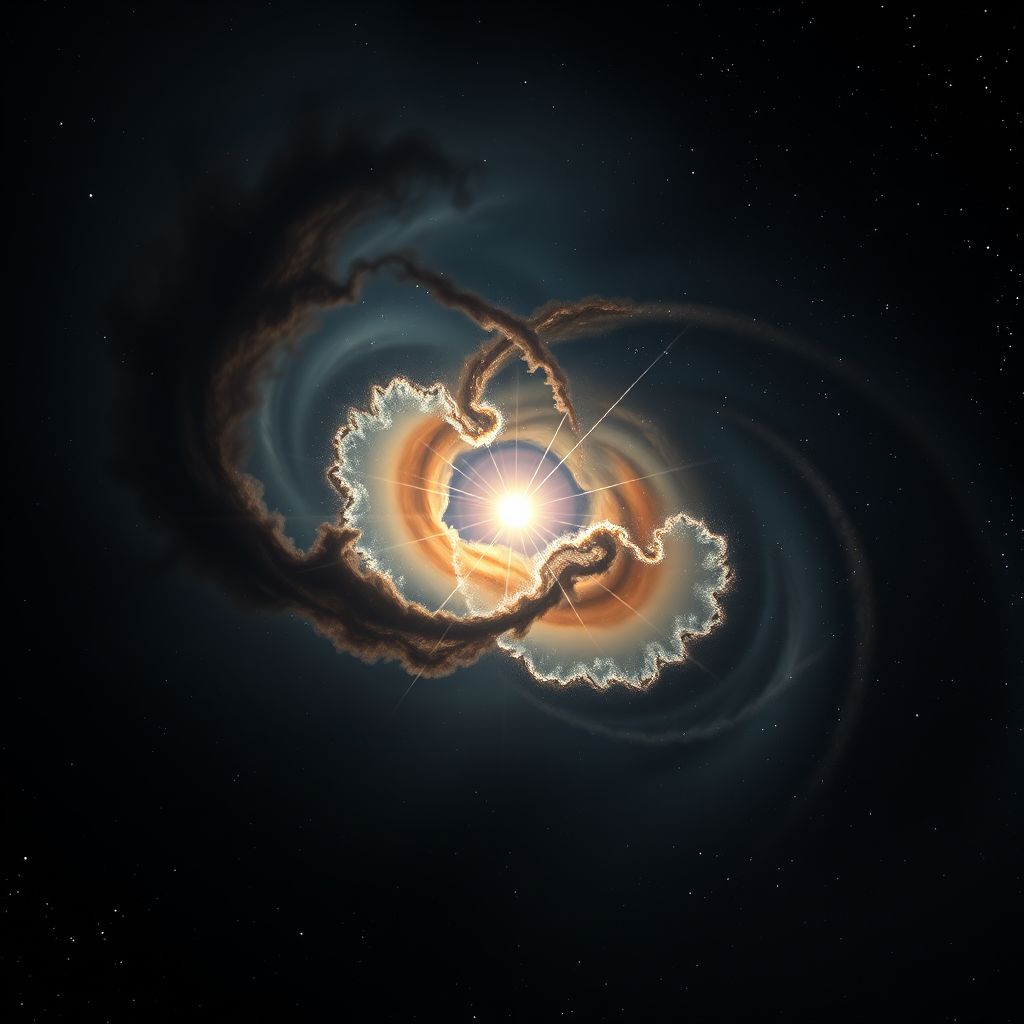
Fast Radio Bursts: Mysterious Signals from Deep Space have captured the imagination of scientists around the world for over a decade now. These fleeting, powerful bursts of radio waves originate in distant galaxies and last just milliseconds but can emit as much energy as 500 million Suns in that brief period. The exact source of these enigmatic signals remains unknown, leading to numerous theories ranging from extraterrestrial communication to cataclysmic cosmic events like the collapse of magnetars.
Table of Contents
- Introduction to Fast Radio Bursts: Mysterious Signals from Deep Space
- Discovery and Early Observations
- Current Theories on the Origin of Fast Radio Bursts: Mysterious Signals from Deep Space
- Observational Challenges and Techniques Used to Detect Fast Radio Bursts
- Impact of Fast Radio Burst Discoveries on Astronomy and Astrophysics Research
- Future Prospects for Studying Fast Radio Bursts: Mysterious Signals from Deep Space
- Public Engagement and Outreach Efforts in the Study of Fast Radio Bursts
Introduction to Fast Radio Bursts: Mysterious Signals from Deep Space
The phenomenon known as Fast Radio Bursts (FRBs) was first identified in 2007 by Duncan Lorimer and his student David Narkevic, who were analyzing archived data from the Parkes radio telescope. Since then, over a hundred FRB events have been recorded, each lasting just milliseconds but packing an enormous amount of energy into that brief time frame. The exact nature of these bursts remains unclear, making them one of the most intriguing mysteries in modern astrophysics.
What Are Fast Radio Bursts?
Fast Radio Bursts are intense pulses of radio waves coming from beyond our Milky Way galaxy. These signals were initially difficult to detect because they last such a short time, making them hard to spot and even harder to analyze properly.
Discovery and Early Observations
The initial discovery of FRBs was accidental, with the first known burst—now referred to as the “Lorimer Burst”—being found retrospectively in archival data. This serendipitous find opened up a new field of research dedicated to understanding these enigmatic signals.
The First Detection
The detection of the first Fast Radio Burst (FRB) came as a surprise to astronomers, who were not expecting such transient and powerful events. This initial burst was found in data collected over a decade earlier at the Parkes Observatory.
Challenges in Early Detection
Early attempts to detect Fast Radio Bursts (FRBs) faced significant challenges due to their unpredictable nature and brief duration, requiring new observational techniques and technologies.
Current Theories on the Origin of Fast Radio Bursts: Mysterious Signals from Deep Space
Fast Radio Bursts (FRBs) are still largely a mystery to scientists. There is currently no consensus on what causes these brief but powerful bursts of radio waves, leading to several speculative theories.
Extraterrestrial Origin Theories
One of the more captivating hypotheses suggests that FRBs could be signals from advanced civilizations far beyond our galaxy. While this theory is intriguing, it remains highly speculative due to a lack of concrete evidence supporting extraterrestrial communication.
Natural Phenomena Theories
Several natural astrophysical phenomena have been proposed as potential sources for FRBs, including the collapse of magnetars and collisions between neutron stars. These theories are based on observations of similar high-energy events within our galaxy.
Observational Challenges and Techniques Used to Detect Fast Radio Bursts
The detection and study of FRBs pose significant technical challenges, requiring advanced equipment and innovative methodologies. These efforts are crucial for unraveling the mysteries surrounding these enigmatic signals.
Technological Advancements in Detection
To capture Fast Radio Bursts (FRBs), astronomers have developed specialized instruments like the CHIME telescope, which is capable of scanning large swaths of the sky continuously to catch these fleeting events. The use of phased array technology has also been pivotal.
Data Processing and Analysis
Once detected, FRBs require extensive analysis using sophisticated algorithms designed specifically for handling high-speed radio wave data. This process involves filtering out background noise and identifying the exact moment when the burst occurred.
Impact of Fast Radio Burst Discoveries on Astronomy and Astrophysics Research
The discovery of FRBs has had a profound impact on various areas within astronomy and astrophysics, prompting new research directions and expanding our understanding of cosmic phenomena.
Advancing Our Understanding of the Universe
Fast Radio Bursts (FRBs) have become a focal point for interdisciplinary research involving radio astronomy, particle physics, and cosmology. These studies contribute to an overall greater comprehension of the universe’s structure and dynamics.
Future Prospects for Studying Fast Radio Bursts: Mysterious Signals from Deep Space
The future holds exciting opportunities for further investigation into FRBs, driven by advancements in technology and new collaborations among international research teams. These prospects are crucial for unraveling the mysteries of these enigmatic signals.
Upcoming Missions and Instruments
Several upcoming missions, including the Square Kilometre Array (SKA) project, promise to significantly enhance our ability to detect and study Fast Radio Bursts (FRBs). The SKA will be one of the most powerful radio telescopes ever built, capable of observing vast areas of the sky simultaneously.
Public Engagement and Outreach Efforts in the Study of Fast Radio Bursts
The study of FRBs has inspired various public engagement initiatives aimed at educating the general populace about these mysterious cosmic signals. These efforts not only raise awareness but also foster a sense of wonder and curiosity among students and enthusiasts.
Educational Programs and Workshops
Programs like OriginCosmic’s educational initiatives play a crucial role in promoting understanding and appreciation of Fast Radio Bursts (FRBs) among young scientists and the broader community.
Conclusion: Key Takeaways on Fast Radio Bursts: Mysterious Signals from Deep Space
In conclusion, while the exact source of Fast Radio Bursts remains unknown, these enigmatic signals continue to challenge our understanding of the cosmos. The discovery and study of FRBs have opened up new avenues in astronomy and astrophysics research, driving technological innovations and inspiring public interest.

- OrginCosmic
- Interstellar Probes and the Future of Space Exploration March 27, 2026
- How Supernovae Shape Galaxy Evolution March 27, 2026
- Unexplained Transient Astronomical Events March 27, 2026
- The Role of Dark Energy in Cosmic Evolution March 27, 2026
- Vacuum Decay: A Doomsday Scenario for the Universe? March 27, 2026