Europa and Enceladus: Hidden Oceans and Possible Alien Life
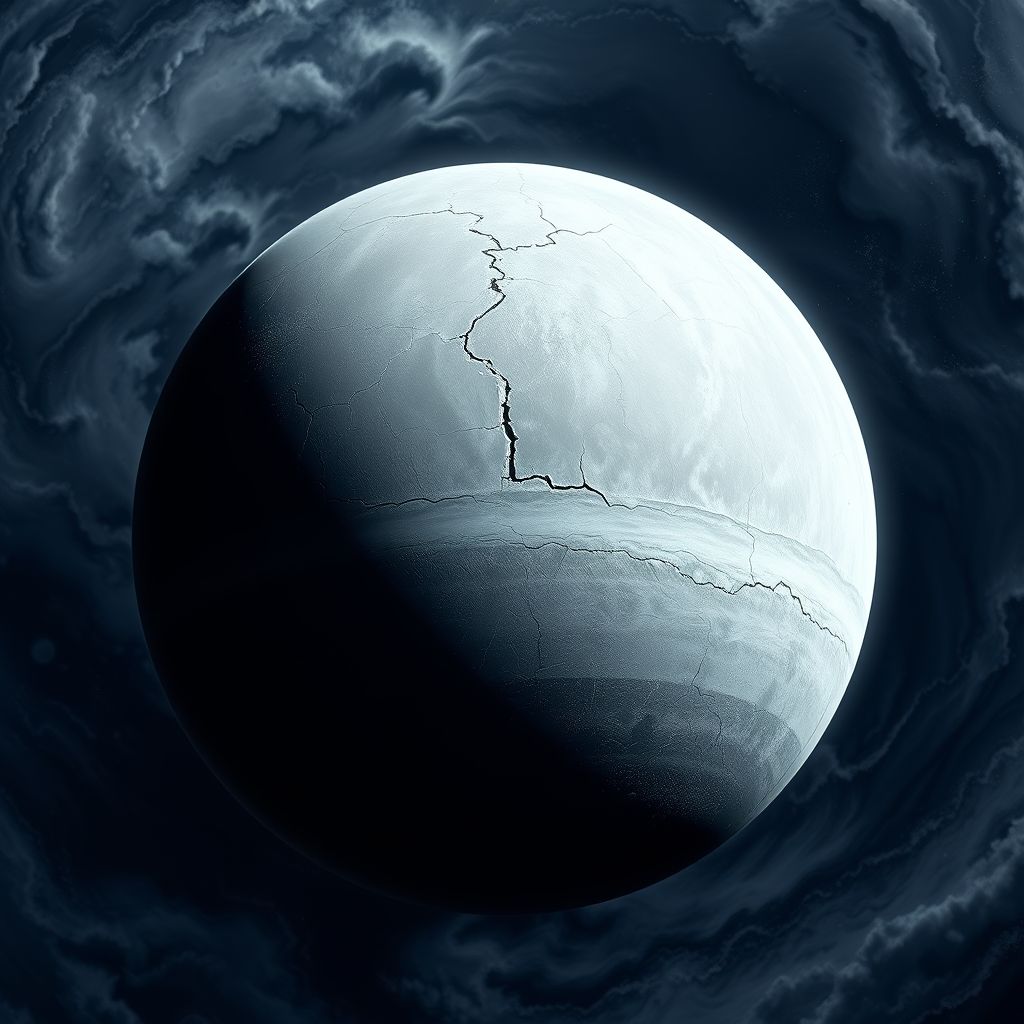
Europa and Enceladus: Hidden Oceans and Possible Alien Life are two of the most intriguing moons in our solar system, captivating scientists with their potential to harbor life beyond Earth. Both moons, despite orbiting planets far from the sun, possess subsurface oceans that may be teeming with microbial or even more complex forms of extraterrestrial life. This article delves into the scientific evidence supporting these theories and explores the latest missions aimed at uncovering the mysteries of Europa and Enceladus.
- Introduction to Europa and Enceladus: Hidden Oceans and Possible Alien Life
- Geological Evidence for Subsurface Oceans on Europa and Enceladus
- The Possibility of Extraterrestrial Life in Europa’s Ocean
- Enceladus: An Icy Moon with a Liquid Heart
- Current and Future Missions to Explore Europa and Enceladus
- Technological Challenges in Studying Subsurface Oceans
- Comparative Analysis of Earth’s Extremophiles and Extraterrestrial Life Hypotheses
- The Importance of Continued Research on Europa and Enceladus: Hidden Oceans and Possible Alien Life
Introduction to Europa and Enceladus: Hidden Oceans and Possible Alien Life
The concept of finding life beyond Earth has long been a cornerstone of scientific inquiry. Among the countless celestial bodies in our solar system, Jupiter’s moon Europa and Saturn’s moon Enceladus stand out as two of the most promising candidates for harboring extraterrestrial life. These moons possess subsurface oceans that could be teeming with microbial or even more complex forms of life, making them focal points in the search for alien existence.
Europa and Enceladus: Hidden Oceans and Possible Alien Life are not just theoretical concepts; they are based on extensive scientific observations and experiments. For instance, Cassini’s flybys of Enceladus revealed plumes of water vapor and ice particles emanating from its south pole, indicating the presence of a subsurface ocean that could be habitable.
Geological Evidence for Subsurface Oceans on Europa and Enceladus
The existence of oceans beneath the icy surfaces of Europa and Enceladus is supported by numerous geological observations. For Europa, evidence includes chaotic terrain, which suggests that ice rafts have moved around due to liquid water beneath them (McEwen et al., 1998). Similarly, Enceladus displays cryovolcanic activity and geysers spewing water vapor and organic compounds into space, directly indicating a subsurface ocean (Porco et al., 2006).
Europa’s Unique Surface Features
Europa’s surface is marked by numerous ridges, bands, and craters. These features suggest that the moon has undergone significant geological activity, likely driven by a subsurface ocean interacting with the icy crust above. The presence of these unique surface characteristics provides strong evidence for the existence of liquid water beneath Europa’s ice.
Enceladus’ Active Plumes
Enceladus is particularly active, with its south pole region showing signs of cryovolcanism. The Cassini spacecraft discovered plumes of water vapor and icy particles emanating from this area, providing direct evidence for a subsurface ocean on Enceladus.
The Possibility of Extraterrestrial Life in Europa’s Ocean
The possibility that life exists within Europa’s ocean is grounded in the discovery of extremophiles on Earth. These organisms thrive in extreme environments such as hydrothermal vents and deep-sea trenches, suggesting that similar conditions could support life elsewhere.
Hydrothermal Activity on Europa
Recent studies suggest that hydrothermal activity may occur within Europa’s ocean due to tidal heating caused by Jupiter’s gravitational pull. This process could provide the necessary chemical energy for microbial life, similar to what has been observed in Earth’s deep oceans.
Implications of Extremophiles
The discovery of extremophiles on Earth has expanded our understanding of where life can exist. If such organisms can survive in the harsh conditions found on Earth, it is plausible that similar forms could thrive within Europa’s ocean.
Enceladus: An Icy Moon with a Liquid Heart
Similar to Europa, Enceladus offers compelling evidence for the presence of extraterrestrial life. The moon’s subsurface ocean is continuously replenished by cryovolcanic activity, making it an attractive target for future exploration.
Chemical Composition of Plumes
The plumes observed on Enceladus contain organic molecules and complex organics, suggesting the presence of a habitable environment. These findings raise the possibility that microbial life could exist within its ocean (Waite et al., 2017).
Comparative Analysis with Earth
By comparing Enceladus’ plumes to those found on other celestial bodies, scientists can gain insights into the potential for life beyond our planet. The discovery of similar chemical signatures elsewhere could indicate a universal set of conditions necessary for extraterrestrial life.
Current and Future Missions to Explore Europa and Enceladus
The exploration of Europa and Enceladus has been prioritized by space agencies around the world. Ongoing missions like NASA’s Europa Clipper aim to further investigate these moons, while proposed future missions include landers that could directly sample their subsurface oceans.
NASA’s Europa Clipper Mission
Set for launch in 2024, the Europa Clipper mission will conduct multiple flybys of Jupiter’s moon to study its atmosphere and surface in detail. This mission is crucial for understanding the potential habitability of Europa’s ocean.
Future Missions
Planning for future missions includes proposals for subsurface probes capable of penetrating Europa’s icy crust to directly sample the subsurface ocean. Such a mission would be groundbreaking in its ability to search for signs of life within these hidden oceans.
Technological Challenges in Studying Subsurface Oceans
Despite advances in space technology, exploring the subsurface oceans of Europa and Enceladus presents significant challenges. These include designing probes that can withstand extreme conditions and accurately measure biological signatures within the ocean.
Designing Robust Probes
Developing robotic systems capable of enduring the harsh environments of these moons requires innovative engineering solutions. For instance, creating a probe that can survive high pressure and low temperatures while still functioning effectively is a major challenge.
Detecting Biological Signatures
Detecting signs of life in subsurface oceans involves advanced analytical techniques to identify biological molecules. This requires sophisticated instrumentation and protocols to ensure accurate results amid the complexities of space exploration.
Comparative Analysis of Earth’s Extremophiles and Extraterrestrial Life Hypotheses
Understanding extremophiles on Earth can provide valuable insights into what forms of life might exist within Europa and Enceladus’ oceans. Comparing these organisms with theoretical extraterrestrial lifeforms enhances our ability to predict where and how life may have evolved.
Earth’s Extremophiles
Microbes found in extreme environments on Earth, such as deep-sea vents, offer a model for what could be possible on other planets. These organisms thrive under conditions once thought uninhabitable, suggesting similar possibilities elsewhere.
Hypothetical Extraterrestrial Lifeforms
Theoretical models of extraterrestrial life often draw parallels with extremophiles found on Earth. By studying these analogues, scientists can make educated guesses about what forms of life might exist in Europa and Enceladus’ oceans.
The Importance of Continued Research on Europa and Enceladus: Hidden Oceans and Possible Alien Life
Continued research into Europa and Enceladus is crucial for advancing our understanding of the universe. Discovering life within these moons would be a monumental achievement, offering unprecedented insights into the origins and potential distribution of life in space.
The exploration of Europa and Enceladus: Hidden Oceans and Possible Alien Life represents one of the most exciting frontiers in modern astronomy. By pushing the boundaries of scientific inquiry and technological innovation, we may soon unlock answers to some of humanity’s oldest questions about our place in the cosmos.
For more cosmic insights, visit Origin Cosmic.

- OrginCosmic
- Interstellar Probes and the Future of Space Exploration March 27, 2026
- How Supernovae Shape Galaxy Evolution March 27, 2026
- Unexplained Transient Astronomical Events March 27, 2026
- The Role of Dark Energy in Cosmic Evolution March 27, 2026
- Vacuum Decay: A Doomsday Scenario for the Universe? March 27, 2026